
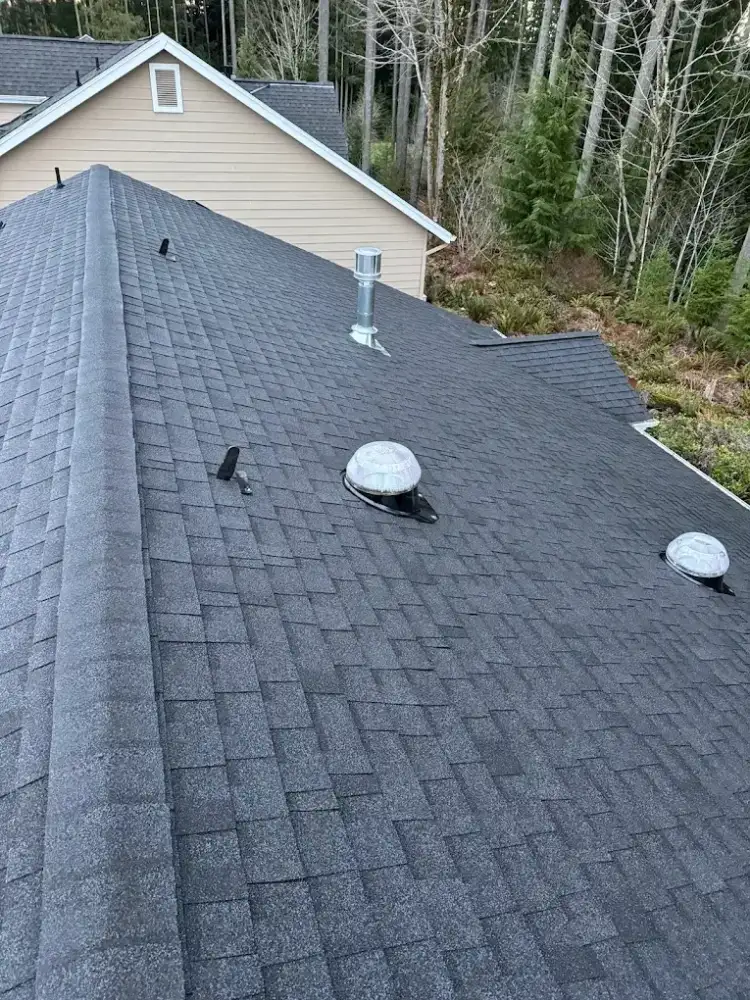
Short answer: reroofing an older Seattle home is entirely routine work — if the contractor plans for what age hides: old layers to tear off, skip sheathing that needs solid decking, chimney flashing past its lifetime, and ventilation that was never right. The homeowners who have bad reroof experiences are almost always the ones whose bids ignored those four things.
What's under a hundred-year-old roof
Seattle's Craftsman bungalows in Ballard, Wallingford, and Greenwood were built for cedar shingles over skip sheathing — spaced boards that let cedar breathe. Somewhere along the decades most got composition shingles, sometimes layered directly over what came before. Peel back a roof in these neighborhoods and you might find two or three generations of material and the original spaced boards beneath.
Modern shingles need solid decking, so a proper reroof on these homes includes sheathing — a known, priceable step when the contractor inspects first. The mid-century stock in View Ridge and across the city usually has solid decking but brings its own patterns: undersized attic ventilation and decking that's weathered sixty Puget Sound winters.
The four things your bid should address
- Tear-off scope. How many layers, and what happens when they're off. Two existing layers means tear-off, full stop.
- Decking plan. How skip sheathing or rot discovered mid-job is priced — per sheet, in writing, before work starts.
- Chimney and penetration flashing. On older homes, replace it with the roof. It's the most common leak source we find, and the cheapest moment to fix it is during the reroof.
- Ventilation. A reroof is the moment to bring intake and exhaust up to standard — it extends shingle life, reduces winter condensation, and keeps manufacturer warranties valid.
Steep lots and city logistics
West Seattle, Magnolia, and Queen Anne add access challenges — steep lots, tight streets, landscaping to protect. It's labor-hour reality, and honest bids account for it rather than discovering it on day one.
The honest process
We start every older-home project with a free photo-documented inspection — attic side included where accessible — so the estimate reflects your actual roof, not a guess. Then a written, line-item scope. That's how a 1920s bungalow gets a 2020s roof without drama: (425) 270-1525.