
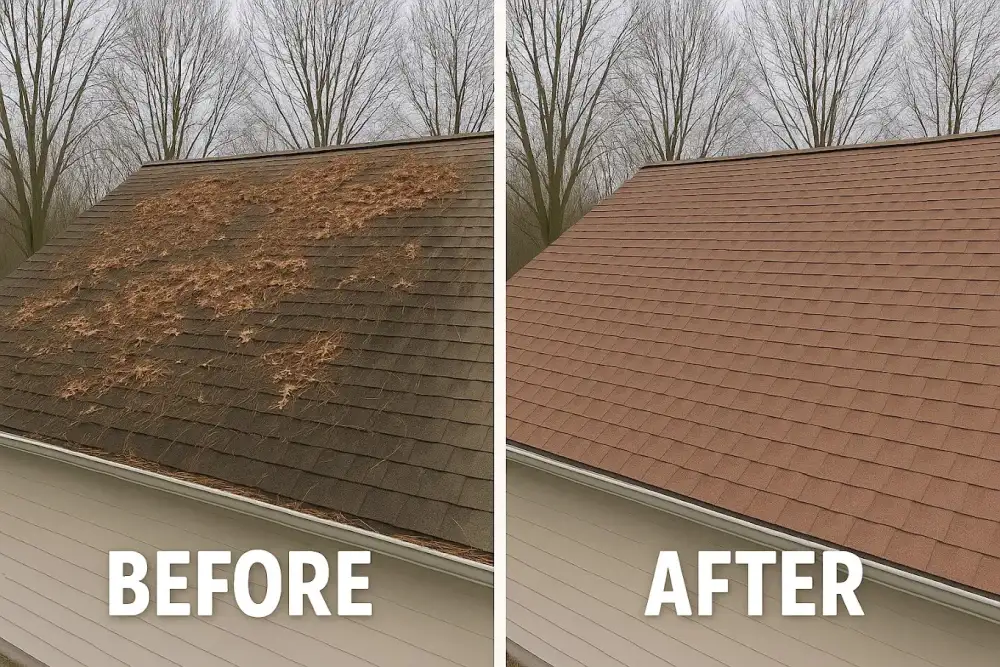
Drive through any tree-lined Puget Sound neighborhood and you'll see them: roofs wearing a green carpet on the north slope. It looks almost charming. It isn't. Moss is one of the most common causes of premature roof failure in Western Washington — and one of the most preventable.
What moss actually does to a roof
Moss doesn't just sit on shingles; it grips them. Its root-like structures (rhizoids) work under shingle edges, lifting them and creating entry points for water. Meanwhile, the moss mat itself acts like a sponge, holding moisture against the roof surface long after the rain stops. Over time this leads to:
- Lifted, curled shingle edges that let wind-driven rain underneath
- Granule loss as the protective surface breaks down
- Clogged gutters and valleys as moss debris sheds and blocks drainage
- Fascia rot and interior water damage when blocked water backs up under the roof edge
Why our region grows so much of it
Moss needs two things: moisture and shade. The Seattle area supplies both in abundance — long wet seasons, mature evergreen canopy, and north-facing slopes that never fully dry out between October and May. Homes in tree-heavy areas like Sammamish, Woodinville, and Finn Hill often see moss establish within a few years of a cleaning.
The wrong way to remove it
Here's where well-meaning homeowners do real damage: never pressure wash an asphalt roof, and never scrape aggressively. High pressure strips away the granules that protect shingles from UV and weather — trading a moss problem for a shortened roof life. Harsh scraping tears shingle edges that moss had merely lifted.
The right way
Proper moss removal is gentle: soft brushing and low-pressure methods to clear the growth, followed by a moss-specific treatment that kills what remains at the root so it doesn't come straight back. Then — the step most people skip — clearing the gutters and valleys of moss debris so drainage actually works. Prevention afterward is simple: trim overhanging branches for more sun, keep gutters clear, and re-treat periodically.
How often should Puget Sound roofs be cleaned?
Every 1–2 years for most homes, depending on shade and tree cover. First Choice Roof Service provides gentle roof cleaning and moss removal across the Greater Seattle area — free estimates at (425) 270-1525.