
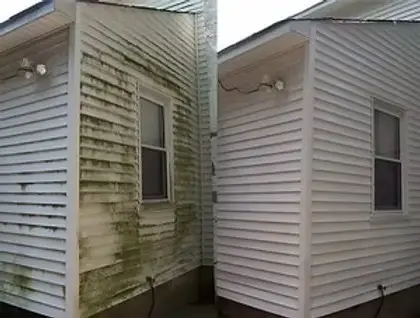
Rent a pressure washer and everything starts to look like it needs blasting. But on many of the surfaces Puget Sound homes grow algae and mildew on — roofs, siding, stucco — high pressure does lasting damage while delivering a short-lived clean.
What high pressure does wrong
- Asphalt shingles: strips the protective granules — permanently shortening roof life. Never pressure wash a shingle roof.
- Vinyl and painted siding: drives water behind panels, strips paint, and etches surfaces.
- Stucco and mortar: erodes the surface and opens hairline cracks to moisture.
- And the clean doesn't last: pressure knocks the visible growth off but leaves the organisms rooted — so green comes back fast.
How soft washing works
Soft washing flips the equation: low pressure, and tailored cleaning solutions that kill mold, moss, algae, and mildew at the source. The chemistry does the work; the rinse is gentle. Two results follow:
- No damage to granules, paint, mortar, or seals
- Longer-lasting results — longer than aggressive pressure washing, because the growth is dead, not just displaced
Where pressure washing still makes sense
Hard, unpainted concrete — driveways, some walkways — tolerates pressure well, though stains like rust respond far better to targeted treatments than to raw force.
The bottom line
For roofs, siding, stucco, stone, and painted surfaces: soft washing, every time. First Choice Roof Service soft washes homes across the Greater Seattle area — safely removing mold, moss, algae, and rust stains without damaging your property. Free estimates: (425) 270-1525.