
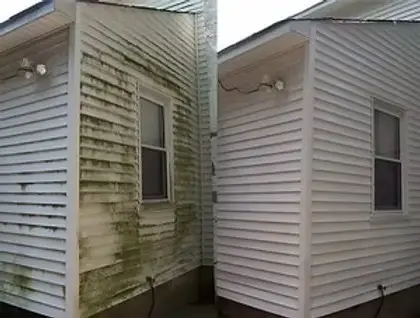
Short answer: pressure wash hard, unpainted mineral surfaces — concrete, stone, pavers. Soft wash everything delicate — siding, stucco, painted wood, fences. And never, under any circumstances, pressure wash an asphalt roof. The machine isn't the problem; pointing it at the wrong surface is.
Green light: concrete and stone
Driveways, walkways, patios, steps. These surfaces tolerate real pressure, and in our climate they need it: Puget Sound shade grows an algae film on concrete that's both ugly and genuinely slippery in the rain. Professional pressure washing — pre-treatment first, then controlled pressure at the right distance — lifts years of green and grime in an afternoon. Even here, technique matters: careless work etches wand lines into concrete permanently.
Yellow light: siding, stucco, painted surfaces, fences
These clean up beautifully — with the other method. High pressure drives water behind vinyl panels, strips paint, and erodes stucco. Soft washing flips the equation: low pressure, tailored cleaning solutions that kill mold, algae, and mildew at the source. Bonus: because the growth is dead rather than just knocked off, soft-washed surfaces stay clean longer than pressure-washed ones.
Red light: the roof
This one is absolute. Asphalt shingles are protected by a layer of mineral granules, and a pressure washer strips that layer off — trading a cosmetic moss problem for years of lost roof life. Every spring we inspect roofs damaged exactly this way, often by well-meaning owners with rented machines. Roof moss gets gentle removal and root-killing treatment, full stop. Anyone who proposes pressure washing your roof has told you everything you need to know about hiring them.
The one-visit approach
The practical upside of matching method to surface: one crew can do it all correctly in a single visit — pressure for the flatwork, soft wash for the siding, gutters cleared while the ladders are up. That's how we book most exterior cleaning across the Eastside and Seattle. Free estimates: (425) 270-1525.