
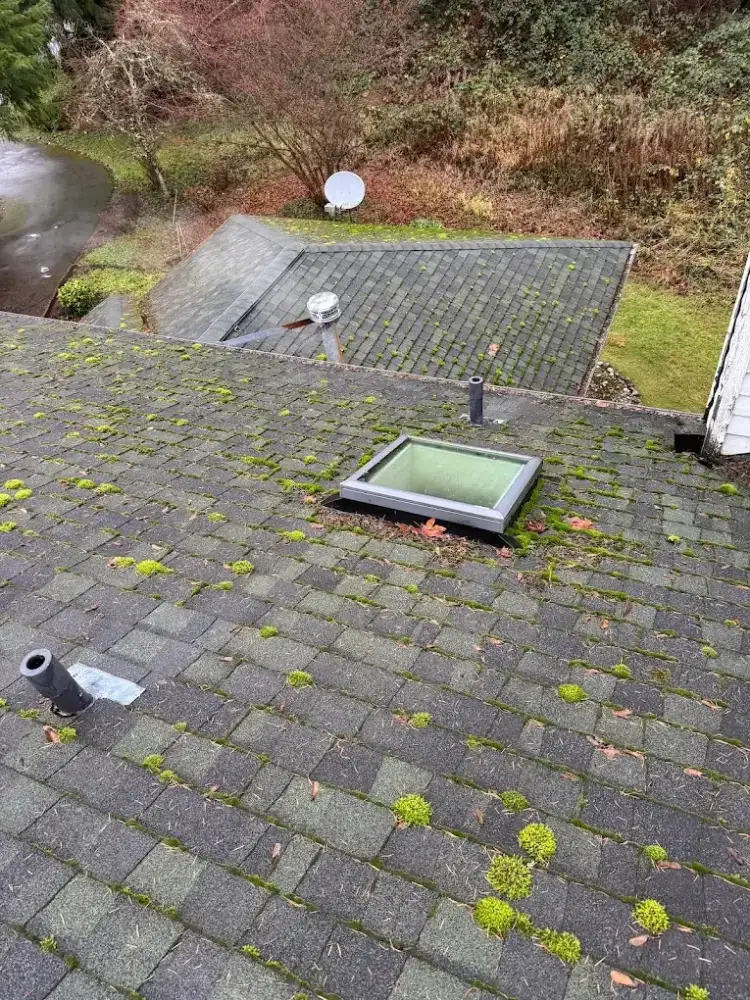
Short answer: in Western Washington, roof maintenance follows the rain. Winter is for watching: check after storms and look in the attic. Spring is for recovery: clean gutters, inspect for winter damage and deal with moss. Summer is for the jobs that need dry weather: moss removal, repairs and a professional inspection. Fall is for getting ready: gutters again, a preventive moss treatment and a final check before the wet months. Take photos in each season so you have something to compare against.
None of this is complicated. The point of a calendar is that the small jobs happen on time, before a clogged gutter becomes rotted fascia or a patch of moss becomes a lifted shingle. Below is a season-by-season plan for 2027, starting with the winter we're heading into now.
Why a calendar matters here
Roofs in the Puget Sound area don't usually fail all at once. They wear down from long wet seasons, shade from tall evergreens, needles and cones in the gutters, and the occasional windstorm. Moss holds moisture against shingles. Clogged gutters push water behind the fascia. A loose piece of flashing lets water into the attic a little at a time. Each of those problems is cheap to fix early and expensive to fix late, which is why timing matters more than effort.
If you'd rather not handle the routine yourself, our roof maintenance service covers the same ground on a schedule. Either way, the calendar below is what to keep track of.
Winter (December–February): watch and record
Winter isn't the season for climbing on a wet, slippery roof. It's the season for watching how the roof handles water and wind, and for catching leaks while they're small.
- Check after every significant storm. From the ground, look for missing or lifted shingles, branches on the roof, sagging gutters and debris in valleys. Binoculars help.
- Look in the attic once a month. Bring a flashlight and look for stains on the decking, damp insulation, daylight, or droplets on nail tips in cold weather.
- Watch your gutters during heavy rain. Water spilling over the front, pouring behind the gutter or bubbling out of a downspout joint all point to a clog or a slope problem.
- Keep downspouts discharging away from the house. Splash blocks and extensions knocked out of place over the winter let water pool next to the foundation.
- Take your winter photos. Photograph each roof slope from the ground, the gutters and anything in the attic that looks different.
If you see active water inside, deal with that first. Our guide to winter storm prep, Winter 2026–27 Storm Prep: A Roof Checklist for Puget Sound Homes, covers what to do before and after a storm, and the emergency steps if a leak starts.
Spring (March–May): recover from winter
Spring is cleanup season. The roof has been through months of rain and wind, and trees have been dropping needles, cones and catkins the whole time.
- Clean gutters and flush downspouts. Spring cleaning removes winter debris and the first wave of spring tree litter before it packs down. Our post on how often to clean gutters in Western Washington explains how tree cover changes the schedule.
- Do a careful ground-level inspection. Look for shingles that are cracked, curling or missing granules, exposed nail heads, damaged ridge caps, and flashing that has pulled away at walls and chimneys.
- Assess moss. Moss that showed up over the winter is easiest to remove before it thickens. Note where it's growing; it usually follows the shade.
- Trim branches. Cut back limbs that touch or hang over the roof. Branches scrape shingles in the wind, drop debris and keep the roof shaded and wet. For large trees, hire an arborist.
- Check skylights and vents. Look for cracked seals, staining on the inside of the shaft and debris piled against the uphill side.
- Take your spring photos. Compare against winter's set.
Summer (June–August): the dry-weather jobs
Summer is when the work that needs a dry roof gets done. Contractors' calendars are busiest now, so book in spring.
- Moss removal. Thick moss comes off more safely on a dry roof, and treatments work best when they aren't immediately rinsed away. Pressure washing is hard on shingles; gentler methods exist. Our comparison of roof moss removal methods sets out the trade-offs.
- Repairs. Anything you noted in winter and spring, such as lifted shingles, worn flashing, failed sealant around vents or a damaged ridge, should be fixed while the weather allows.
- A professional inspection. Once a year, have someone walk the roof, check flashing up close, and look at the attic. Ask for photos so you can see what they saw.
- Attic ventilation check. On a hot afternoon, a stuffy, very hot attic or blocked soffit vents can signal poor airflow, which affects both shingle life and winter condensation.
- Take your summer photos, ideally after any cleaning or repair, so you have a clean baseline.
A good moss job should leave the roof clear and the ground clean. One customer wrote that Vanderlei "did a super job getting rid of the moss, and cleaned up afterwards." You can read the roof moss removal review. Cleanup is worth asking about up front with any contractor.
Fall (September–November): get ready for the wet months
Fall is the most important season on the calendar. What you do now decides how the roof handles the next several months of rain and wind.
- Clean gutters after the leaves drop. The timing matters: cleaning too early means doing it twice. For homes under deciduous trees, late fall is the key cleaning; evergreens drop needles year-round.
- Consider gutter guards. If you're cleaning gutters three or four times a year, guards may reduce the work, though none are maintenance-free. Our gutter guards comparison explains which types handle fir needles and which clog.
- Apply a preventive moss treatment. On roofs that grow moss, a fall treatment on a dry day helps slow regrowth through the wet season.
- Check flashing, vents and the chimney. Look for gaps, cracked sealant, loose counterflashing and anything a storm could catch.
- Clear valleys and the uphill side of chimneys and skylights. Debris in these spots slows water and pushes it under shingles.
- Do a fall attic check. Confirm insulation isn't blocking soffit vents and bathroom fans vent outdoors, not into the attic.
- Take your fall photos. These are your pre-winter record, and the set you'd want if a storm damages the roof.
The 2027 calendar at a glance
- Every month: quick ground-level look; attic check during the wet season.
- After every big storm: roof, gutters and attic check; photos of any damage.
- Spring: gutters, moss assessment, tree trimming, spring photos.
- Summer: moss removal, repairs, professional inspection, ventilation check.
- Fall: gutters after leaf drop, moss treatment, flashing and valley check, fall photos.
- Once a year: organize photos, receipts and inspection reports in one folder.
Adjusting the calendar for your house
The calendar above fits a typical composition shingle roof with some trees nearby. Your house may need a different rhythm.
Heavy tree cover
If firs, cedars or big maples hang over the house, move everything up a notch: gutter checks every couple of months, a look at valleys after any windy week, and moss checks every season rather than twice a year. Shaded slopes stay damp longest and are usually where moss starts. Trimming back overhanging limbs is often the single change that reduces maintenance most.
Metal roofs
Metal sheds needles and moss more easily than shingles, but debris still collects behind chimneys, along panel seams and in gutters. Check fasteners and sealant at penetrations each spring and fall, and ask any cleaner how they protect the finish before they start.
Cedar shake roofs
Cedar needs more attention than most roofs. Debris trapped between shakes holds water, and moss and lichen speed up decay. Plan on keeping the surface clear through the year and having the roof looked at closely each summer. Our page on cedar shake roofing covers the upkeep in more detail.
Flat and low-slope sections
Low-slope roofs over porches, additions and garages don't shed water as quickly. After heavy rain, look for standing water that lingers well after the storm, and keep drains and scuppers clear of needles and leaves.
Signs to call sooner than the calendar says
A calendar is a floor, not a ceiling. Don't wait for the next season if you notice any of these:
- A new stain on a ceiling or wall, or a drip in the attic.
- Shingles, ridge caps or pieces of flashing in the yard.
- Gutters pulling away from the fascia or water pouring behind them.
- Soft, dark or crumbling fascia boards.
- Moss thick enough to lift shingle edges.
- A branch or limb resting on the roof after a storm.
Each of these is cheaper to deal with this week than next season.
How to take useful baseline photos
Photos only help if you can compare them. A few habits make them worth having:
- Stand in the same spots each time. Pick a spot for each slope, mark it in your notes, and shoot from there every season.
- Include the whole slope and a close-up. A wide shot shows patterns like moss spread; a zoomed shot shows individual shingles and flashing.
- Photograph gutters and downspouts, especially corners and joints.
- Photograph the attic from the hatch and at any spot that has given trouble before.
- Name the folder with the date. "2027-04 spring roof" is easier to find than a camera roll.
Those dated photos also matter if you ever file an insurance claim, because they show what the roof looked like before an event.
Keep the paperwork in the same place. Receipts for gutter cleaning, moss treatment and repairs, plus any inspection reports, build a simple maintenance history for the roof. That record helps when a contractor asks what has been done before, when you sell the house and a buyer's inspector has questions, or when an insurer wants to know how the roof has been cared for. A shared folder or a single envelope in a drawer is enough, as long as everything goes into it.
What you can do yourself, and what to hand off
Most of this calendar is ground-level work: looking, photographing, checking the attic, and keeping downspouts pointed the right way. Plenty of homeowners clean single-story gutters safely from a ladder. Climbing on the roof itself is a different matter. Wet shingles, moss and needles make roofs slippery, and steep or two-story roofs are a job for people with fall protection and the right footwear.
A sensible split for many homes: you do the monthly looks, photos and attic checks; a professional handles moss removal, high gutters, repairs and the annual inspection. First Choice Roof Service is licensed, bonded and insured in Washington and offers free, photo-documented inspections across the Greater Puget Sound area. To set up your 2027 maintenance, contact us or call (425) 270-1525.