“Vanderlei arrived early with a smile, and got right to work. He did a super job getting rid of the moss, and cleaned up afterwards.”
— Melissa Mohamed
From the first call to a cleaner roof
Melissa Mohamed posted her five-star review in May 2024, and she started at the beginning: “From the initial contact requesting a quote, to the final result, everything went smoothly.”
On the day of the work, she wrote, “Vanderlei arrived early with a smile, and got right to work.” She credited him with “a super job getting rid of the moss,” and noted that he “cleaned up afterwards.” Her verdict was short and happy: “My roof looks so much better!”
The review touches the three things homeowners tend to notice most about a moss removal: how easy it was to get a quote and book, how the person doing the work showed up, and what the roof and yard looked like when they left. Moss removal is simple to describe and easy to do badly, with too much pressure, a slippery roof, or clumps of moss left in the gutters and on the walkway. Those are the details worth asking about before anyone gets on your roof.
What her photos show
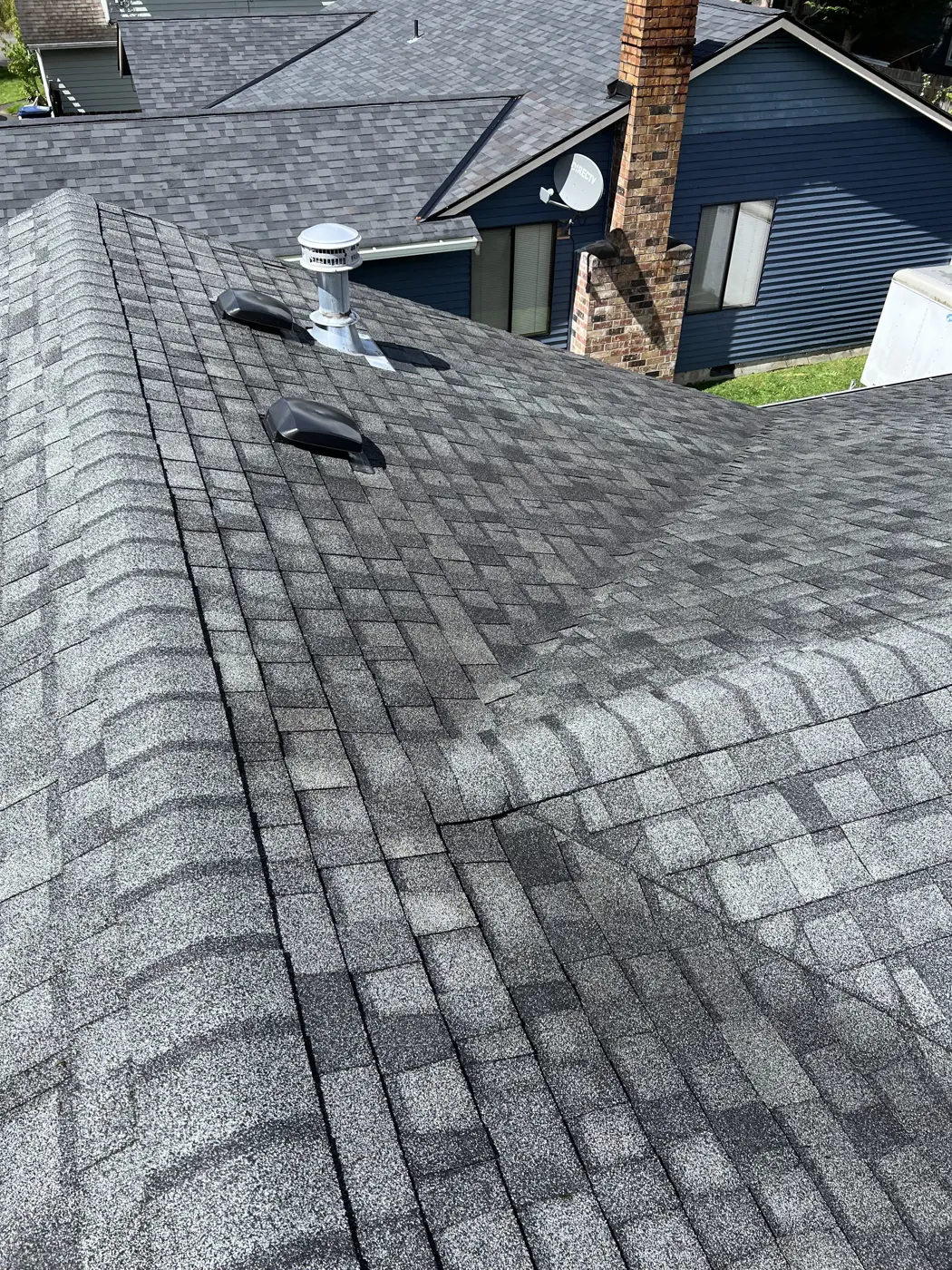
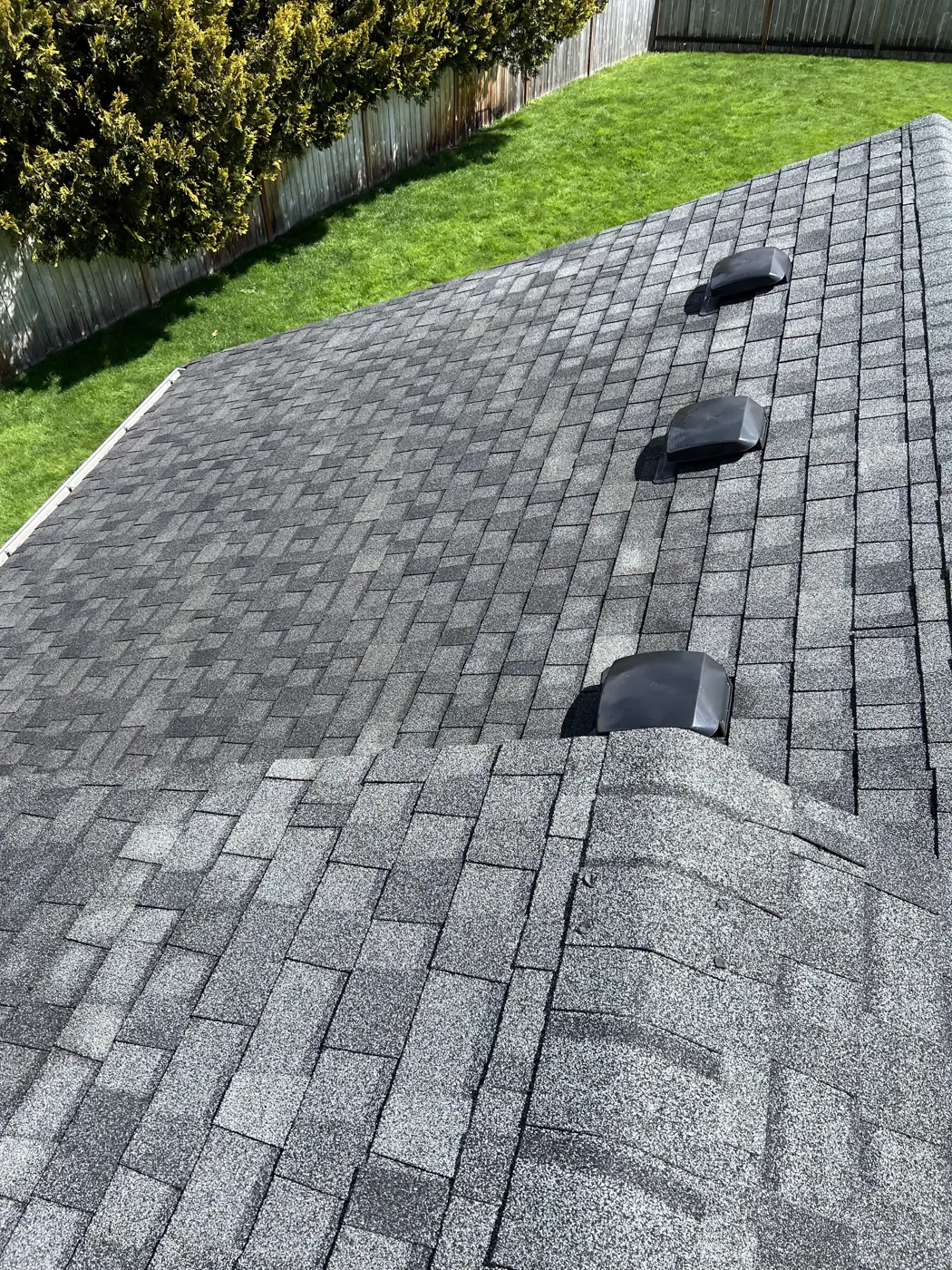
Melissa's two photos were taken up on the roof. The first looks along a gray architectural shingle slope with three dark box vents in a row, ridge cap shingles in the foreground, and a lawn and wood fence below. The second shows where the ridge and hip lines meet, with box vents, a pipe vent and a brick chimney, and blue siding and a satellite dish in the background.
Those are the spots where moss tends to settle on a Puget Sound roof. Moss likes shade and moisture, so it usually starts on north-facing slopes, under overhanging trees, along the ridge cap, around vents and chimneys, and in the gaps between shingle tabs. If you are checking your own roof, look at those places first. A pair of binoculars from the yard is safer than a ladder, and a wet roof is no place to walk.
How moss comes off without hurting the shingles
There are a few common ways to remove roof moss, and they are not equally kind to a roof. Our roof moss removal methods comparison lays them side by side, but the short version is this:
- Hand removal and brushing lifts moss off the surface without blasting the shingles. It takes longer and is usually paired with a treatment.
- Soft washing uses low pressure and a cleaning solution to kill moss and algae. The dead growth then loosens and washes off, sometimes over several rains.
- High-pressure washing clears moss fast, but it can strip the protective granules from asphalt shingles and force water up under the laps.
- Preventive treatments applied after cleaning help slow regrowth.
Timing matters too. Most moss treatments need a stretch of dry weather after they go on, so in a wet Puget Sound spring or fall, ask how the schedule allows for rain.
Whoever you hire, ask how they will remove the moss, what they will put on the roof, and how they will protect plants, pets and anything underneath. Our roof cleaning and moss removal page explains how First Choice approaches it.
Cleanup, and keeping the moss from coming back
Moss that comes off a roof has to go somewhere. Much of it lands in the gutters, on walkways and in garden beds, which is why “cleaned up afterwards” is worth noticing in a review like this one. Before the work starts, ask whether the gutters will be cleared once the moss is off, and how debris on the ground will be handled.
Keeping moss away is mostly about light, airflow and drainage:
- Trim branches that shade the roof or drop needles and leaves on it.
- Keep gutters and downspouts clear so water drains off the roof edge.
- Have the roof looked at once a year, ideally before the wet season, so new growth is caught while it is small.
- Ask about a preventive treatment if your roof sits in shade most of the day.
On a shaded Puget Sound roof, moss is rarely a one-time problem. A little upkeep each year costs less than letting it build back up, and it is easier on the shingles. Regular roof maintenance is the simplest way to stay ahead of it.