
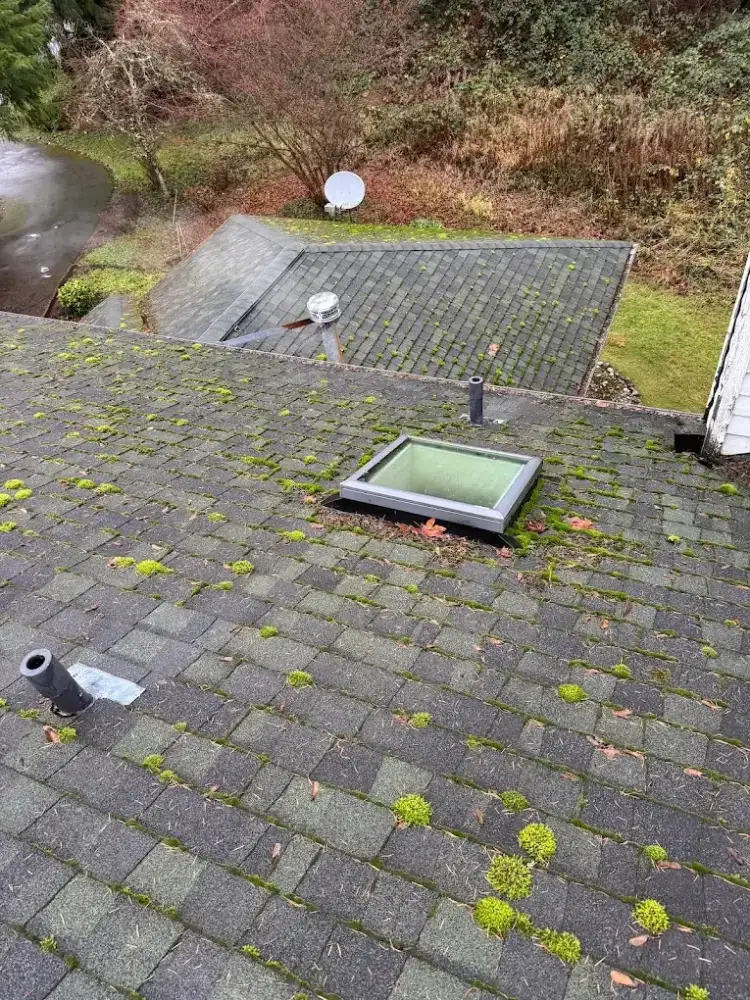
Short answer: prevention and early-stage treatment are legitimately DIY; established moss and any meaningful pitch are not. The two ways homeowners lose here are identical every year: pressure washers that strip granules, and ladders that strip confidence. Know the line, and moss control is straightforward.
The DIY-safe zone
- Trim and lighten. Overhanging branches cut back = more drying sun and less needle load — the highest-value moss work there is, done from the ground or by an arborist.
- Gutter hygiene. Clear gutters drain the roof properly; damp debris feeds the cycle. See our gutter schedule guide.
- Early treatment. Moss-specific products (not bleach) applied to the first green fuzz on an accessible roof, per label, with landscaping protected below.
- Zinc strips — modest ongoing suppression in the wash path; useful supplement, oversold as a cure.
Where DIY ends
Established moss has roots under shingle edges — removal at that stage is a technique job: soft brushing at the right angle and pressure, root-killing treatment, then clearing the debris from gutters and valleys where it lands. Add pitch, wet surfaces, and two-story eaves, and the risk calculus is done: this is why our cleaning crews carry fall protection and you shouldn't have to.
The two cardinal sins
Pressure washing converts a cosmetic problem into structural aging — the granules it strips were the shingle's UV armor, and they don't come back. Aggressive scraping tears the edges moss had merely lifted. Both feel productive in the moment; both show up in our repair queue later.
The sensible split
You own prevention: trimming, gutters, sunlight. We own removal and treatment on the 1–2 year rhythm shaded Puget Sound roofs need. That split keeps roofs alive and homeowners on the ground — quotes are free: (425) 270-1525.