
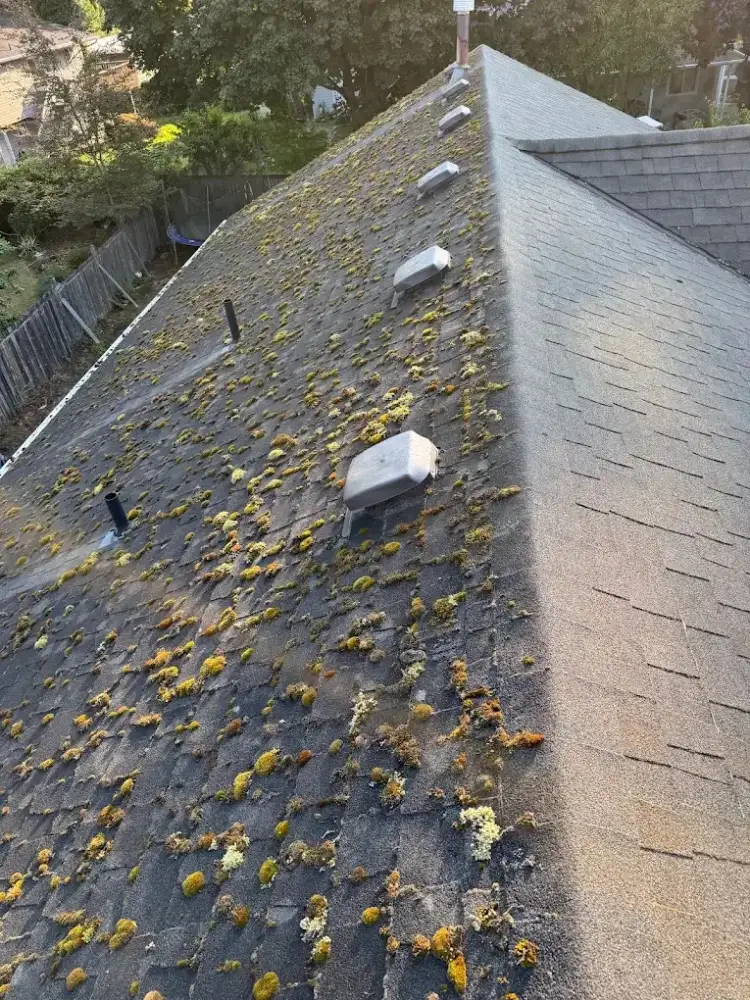
Short answer: protect your yard in three layers. Before the crew arrives, clear and cover everything that can be moved or covered: the pool, patio furniture, pots, vegetable beds and pet bowls. Before you book, ask the contractor exactly how moss and debris will be contained, where rinse water and any treatment will go, and who cleans the ground afterward. After the job, walk the property with a short checklist covering the pool, plants, deck, walkways, gutters and downspouts. Most of the damage a roof cleaning can do isn't to the roof. It's to whatever sits underneath it.
A roof cleaning moves a surprising amount of material. Years of moss, fir needles, cones and grit come off the shingles and have to land somewhere, usually in the gutters, on the deck, in the flower beds or, if things go badly, in the pool. The difference between a tidy job and a week of cleanup is mostly planning, and a good share of that planning is yours.
What one Redmond homeowner noticed
When Peng Jin had the roof and gutters cleaned at a Redmond home with a backyard swimming pool, the part of the job that stood out in the review wasn't the roof itself. It was that the crew "were so careful that not a single piece of debris or moss fell into the water", and that they finished by "cleaning our deck and entry stairs before leaving". You can read the full Redmond review and see the photos.
That's a fair standard to hold any roof cleaner to, and it helps to know what makes it possible. What follows is a practical guide to protecting the parts of your property that sit under the roofline, written for Puget Sound homes, where tall evergreens, wet springs and backyard gardens all share the same small footprint.
Before the crew arrives: a homeowner prep list
None of this takes special equipment, and most of it is a short evening's work. Doing it yourself means nothing valuable is left for the crew to guess about.
- Clear the drip line. Move patio furniture, cushions, grills, planters, kids' toys, bikes and pet bowls well beyond the edge of the roof. Anything left under the eaves will catch falling debris and splash.
- Move vehicles. If the driveway sits under a roof slope or near where ladders and hoses will go, park on the street for the day.
- Close windows, doors and vents. Shut windows, any skylights that open, and dryer or crawlspace vents near the roofline so mist and grit stay outside.
- Bring pets inside. Dogs and cats don't need to walk through moss clumps or wet treatment, and an excited dog at the base of a ladder is a hazard for everyone.
- Point out what's fragile. Mention delicate plantings, a fish pond, a vegetable bed, outdoor lighting, irrigation heads or anything else the crew might not notice until it's under a ladder foot.
- Turn off the irrigation. Sprinklers that kick on mid-job soak the ground where ladders stand and wash debris deeper into beds.
- Unlock gates and show the crew the spigots. Most roof cleaning needs a hose connection. Say which outdoor faucets work and which to avoid.
What to ask the contractor before you book
A roof cleaning quote should tell you more than a price. These questions sort careful operators from careless ones, and a good roof cleaner will answer every one of them without hesitating.
- What method will you use on my roof? Asphalt shingles should be cleaned gently, with hand brushing, blowing and low-pressure application, not blasted with a pressure washer that strips the protective granules. Our guide to soft washing vs. pressure washing explains why the difference matters.
- Will you apply a moss treatment, and which product? Ask for the product name so you can read its label. Moss killers are pesticides, and the label states where they can be used and what they must be kept away from.
- How will you keep debris out of the pool, beds and gutters? Listen for specifics: covers and tarps, working debris toward the gutters instead of over the edge, and cleaning the gutters last.
- Where will rinse water and runoff go? A good answer takes in your downspouts, your planting beds and the storm drain at the curb.
- Is ground cleanup included? Decks, walkways, patios and entry stairs should be named in writing, not assumed.
- Where will the ladders stand? Ladder feet can crush plants, scratch decking and dent gutters. Ask how each is protected.
- Will you photograph the roof before and after? Photos show you what the crew saw on slopes you can't see from the ground.
Pools and hot tubs
A pool is the hardest thing on the property to protect, because it's a wide, open target that collects everything that drifts. A few habits make a big difference.
- Skim and empty the baskets the day before. Starting with a clean pool makes it obvious if anything new lands in it, and gives the skimmer room to work.
- Cover it if you can. A solid safety or winter cover blocks debris and runoff better than a mesh cover, which lets fine grit and water through. If you use a solid cover, pump off any water that collects on top before you remove it, so it doesn't spill into the pool.
- Add a leaf net if there's no cover. A leaf net or tarp anchored along the side nearest the house catches the clumps that do get airborne.
- Tell the crew which slopes face the pool. On those roof planes, debris should be worked up and away or into a gutter, never pushed over the edge.
- Check the water before anyone swims. If rinse water or treatment solution reached the pool, test the chemistry and run the filter first. Your pool service can tell you what to look for.
Hot tubs deserve the same care: close the lid, strap it down and wipe it off before you open it again. Ponds with fish need the most caution of all, since the labels on many moss products warn against letting them reach water. Cover the pond and keep runoff away from it entirely.
Plants, gardens and runoff
Plants get hurt two ways during a roof cleaning. The first is physical: falling debris, dragged hoses and ladder feet. The second is chemical: treatment solution or rinse water that runs off the roof and soaks the soil. Both are preventable.
Physical protection
Lightweight breathable fabric or old bedsheets work well over low shrubs and perennials. Avoid wrapping plants in plastic for hours on a warm day, because it traps heat. Move potted plants away from the house, and tie back climbing roses or vines on trellises near the eaves so ladders don't land in them.
Chemical protection
- Water the beds well beforehand. A common practice is to pre-wet plantings at the base of the house so roots are full of clean water and any drift is diluted. Ask whether your contractor does this, or do it yourself the morning of the job.
- Cover edible gardens. Vegetable beds, herbs and fruit under the drip line should be covered, and anything that does get splashed should be rinsed before you harvest.
- Rinse afterward. A gentle rinse of foliage and soil near the foundation once the job is done dilutes anything that landed.
- Know where your downspouts go. If a downspout empties into a flower bed or a rain barrel, the first rinse off the roof goes straight there. More on that below.
Runoff matters beyond your own yard, too. In many Puget Sound neighborhoods, the storm drain at the curb leads to a local creek or lake rather than a treatment plant. A careful contractor keeps treatment on the roof and out of the street.
Decks, patios and walkways
Decks take more abuse during a roof cleaning than most homeowners expect. Wet moss clumps can stain wood and composite boards if they're left to sit, grit gets ground into the finish under boots, and treatment solution that drips onto a stained deck can discolor it.
- Clear the deck completely. Furniture, rugs, planters and grills can all trap debris or get splashed.
- Ask about pads under ladder feet on decks and patios, and on any delicate surface like a painted porch.
- Expect slippery surfaces. Wet moss and needles make decks, stairs and walkways slick. Keep family members off them until they're cleared and dry.
- Insist on cleanup before the crew leaves. Debris swept off a deck the same day is a small chore. Debris left through a week of rain becomes a stain.
Walkways and entry stairs follow the same rule. They're also the first thing you and your guests see, which is why a crew that leaves them clean makes such an impression. The Redmond review above singles out exactly that.
Gutters and downspouts: the overlooked weak point
Gutters catch most of what comes off a roof during cleaning. That's the point, but it also means a roof cleaning can choke a gutter that was working fine the day before. Here's how to keep water going where it should.
- Roof first, gutters last. The logical order is to clean the roof, clear the gutters of everything that came down, then flush the downspouts. Ask whether gutter cleaning is included or quoted separately.
- Disconnect or divert rain barrels. If you collect rainwater for the garden, disconnect the barrel or switch the diverter so the first rinse off a treated roof doesn't end up on your tomatoes.
- Redirect downspouts that drain into beds. For the day, point them toward lawn or a splash block away from sensitive plants.
- Check underground drains. Many homes route downspouts into buried pipe, and moss and needles washed down can clog those lines out of sight. After the job, run a hose into each downspout and confirm water comes out the other end.
For more on why this matters to your foundation, read our guide to downspouts, drainage and foundation protection.
Timing and weather
Roof cleaning around the Sound is usually scheduled for a dry stretch. Rain right after a treatment can wash it off the roof and into the yard before it works, and wind carries mist and loose debris farther than you'd expect. If the forecast turns, a good contractor will move the date rather than push through. A dry, calm day also makes the cleanup on the ground easier for everyone.
Fall is a popular time for roof cleaning and moss removal because it clears the roof before the wet season, but it's also when needles and leaves are coming down. If your yard is heavily treed, ask whether the job includes a final gutter pass, or plan a second gutter cleaning later in the season.
After the job: a walkaround checklist
Before the crew leaves, or as soon as you get home, take a few minutes to walk the property. You're looking for anything that's easier to fix today than next week.
- Pool: check the skimmer baskets, the pool floor and the cover for moss clumps and needles.
- Plants: look for broken stems and crushed beds near ladder spots. Over the next few days, watch for browned or spotted leaves near the house, and rinse them if you see any.
- Deck and walkways: swept clear, with no moss, stain marks or ladder scuffs.
- Gutters and downspouts: no debris in the troughs you can see, downspouts flowing, and rain barrels reconnected when you're ready.
- The roof itself: from the ground, look for lifted or displaced shingles and any patch that looks missed. Ask to see the after photos for slopes you can't see.
- Windows and siding: mist and grit sometimes land on glass. A quick rinse handles it.
If a moss treatment was applied, some remaining growth may brown and loosen over the following weeks as rain does its work. Ask the contractor what to expect, so you can tell the difference between a roof that's still clearing and a spot that was missed.
When it makes sense to hire it out
Plenty of homeowners clean their own patios and decks. Roofs are different. A wet, mossy roof is slick, two-story eaves are high, and the ground protection described above is half the job. If you're weighing it, our comparison of DIY moss removal vs. hiring a professional lays out the tradeoffs honestly.
First Choice Roof Service is based in Redmond and cleans roofs and gutters across the Greater Puget Sound area. For a free written estimate, and straight answers to every question on the list above, reach us through the contact page or call (425) 270-1525.