
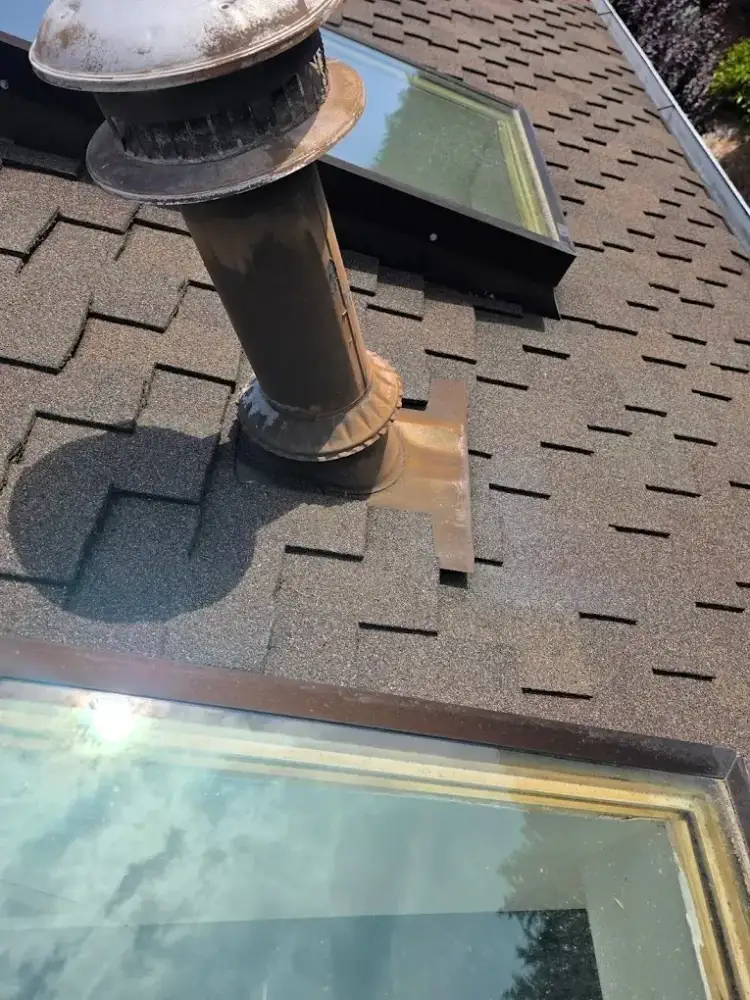
Short answer: when water appears around a skylight, the glass is almost never the culprit. It's the flashing — the metal system weaving the skylight into the roof — or the unit's aging seals, or it's not a leak at all but condensation. Each has a different fix, and misdiagnosis wastes money.
Flashing: the usual suspect
A skylight is a hole in your roof, and the flashing around it is what makes that hole safe. Water runs downslope, hits the skylight, and must be steered around it by head flashing, step flashing along the sides, and a sill below. When any piece corrodes, lifts, or was installed as caulk-and-hope, water finds the shaft. The repair is craft work — rebuilding the flashing integration properly — and it's a standard job for our repair crews.
Condensation: the imposter
Puget Sound winters produce a steady stream of 'skylight leak' calls that are actually indoor humidity condensing on cold glass — especially in kitchens, baths, and homes with the ventilation problems we covered previously. Clues: moisture on the glass itself rather than the surrounding drywall, worst on clear cold mornings, no correlation with rain. The fix lives in ventilation and humidity, not roofing.
The debris dam
Skylights on low-slope sections or under heavy canopy collect needle mats on their uphill side, ponding water against seals never designed to be submerged. Homes in Woodinville and Issaquah know this one well. Regular roof maintenance clears the dams before they test the seals.
Repair, replace, or wait for the reroof?
Flashing problems: repair now — water doesn't wait. Fogged or elderly units on a roof with years left: replace the unit. Roof due within a couple of years: fold skylight replacement into the reroof, where it's cheapest and cleanest. A free inspection sorts your situation into the right bucket: (425) 270-1525.