
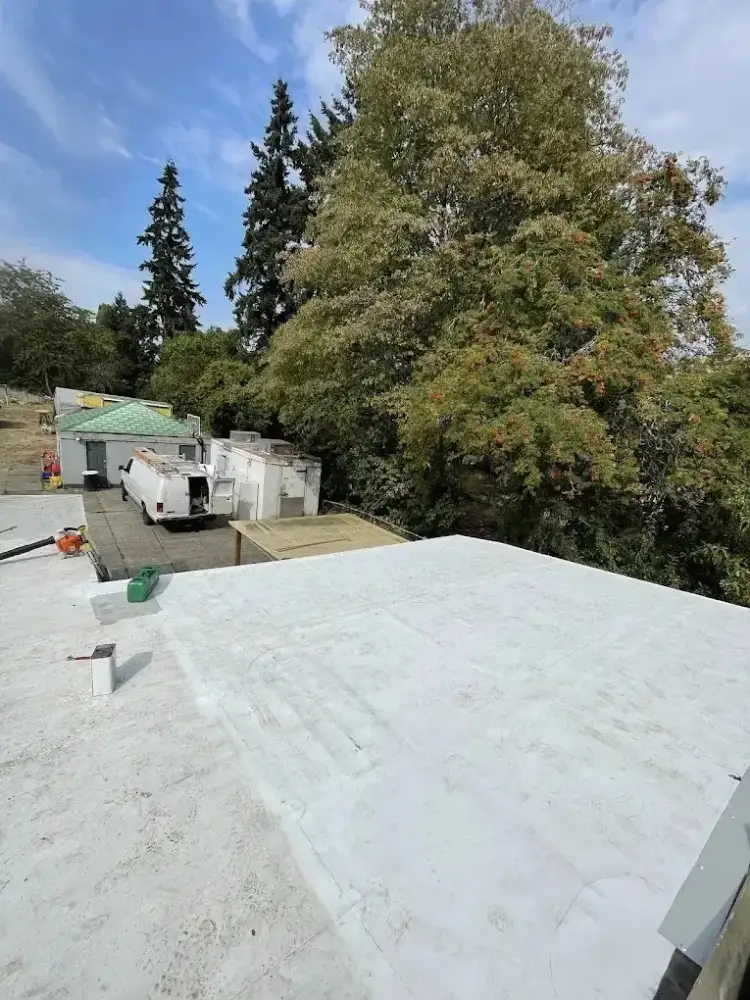
Short answer: "flat" roofs are engineered with subtle slope toward drains — ponding means that engineering has been interrupted, usually by a clogged drain, sometimes by settled insulation or structure. The 48-hour rule sorts normal from warning: water that outstays it is aging your membrane on fast-forward.
Why ponds are expensive
A pond is a stress multiplier: it loads the deck (water is heavy), keeps the membrane wet and UV-magnified, collects the debris that feeds growth, and probes every seam it covers. Membranes tolerate weather; they resent submersion. On commercial buildings the failure mode is direct — pond over seam over inventory — which is why low-slope work obsesses over drainage.
Finding the cause
Start at the drains. The majority of ponding we're called about in Woodinville's commercial district and on Seattle townhomes is leaves and debris over a drain or scupper — solved in an hour, prevented by a schedule. Then read the surface. Ponds away from drains mark low spots: crushed insulation under old traffic paths, settlement, or original slope that never was. Persistent, growing, or centered ponds get a structural look before anything else.
The fixes, honestly ranked
- Drainage restoration — clearing plus a maintenance rhythm. Cheapest, most common, most neglected.
- Tapered insulation — rebuilding slope in the low field, typically during membrane repair or replacement.
- Added capacity — another drain or scupper where geometry overwhelms one outlet.
- Structural correction — the rare, real one; diagnosis first, always.
Homes have flat roofs too
Townhome roofs, mid-century additions, garage tie-ins — the same physics at residential scale, often with zero maintenance history. If your flat section ponds, sags, or blisters, the free inspection reads it: (425) 270-1525.