
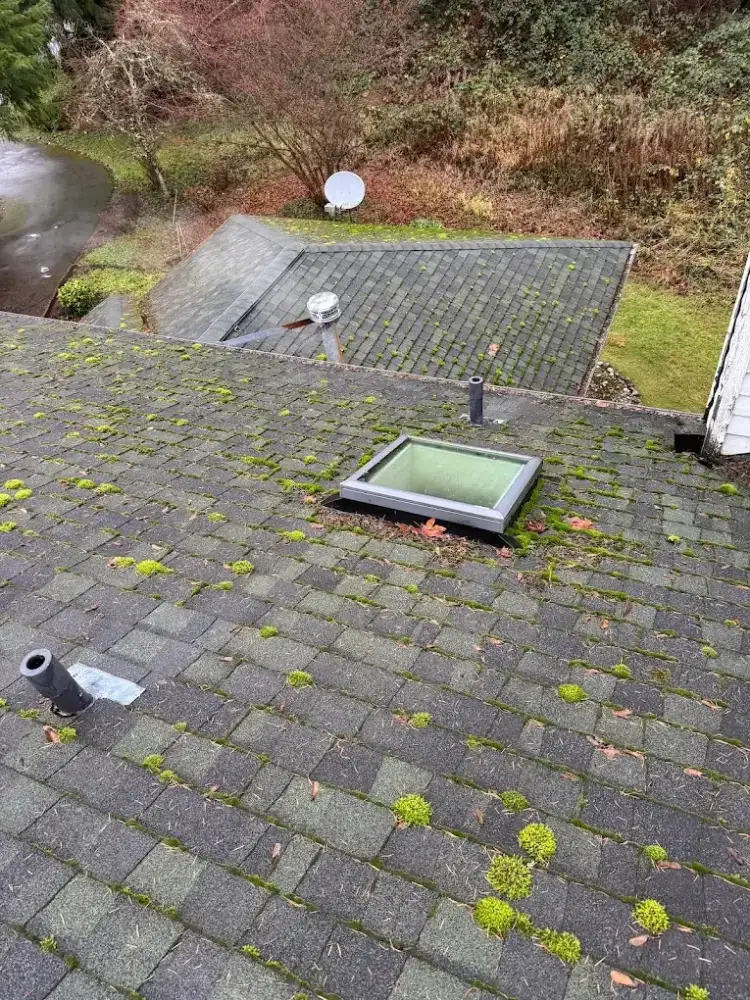
Reflash the existing skylight
Most skylight leaks are flashing leaks, not glass leaks. The flashing is the metal that steers water around the skylight: a head piece on the uphill side, step flashing along the sides and an apron or sill below. When any of it corrodes, lifts or was installed with caulk doing the work that metal should do, water gets into the shaft and shows up as a stain on the drywall around the opening.
Reflashing means taking up the shingles around the skylight, removing the old flashing, and installing new pieces layered with the shingles so water is always directed over, never under. When the skylight unit itself is sound, with clear glass, no fogging between panes and a solid frame, this fixes the leak without replacing anything you can see from inside.
When reflashing isn't enough
- Fogging between the panes. That's a failed seal in the glass unit, and new flashing won't fix it.
- A cracked or crazed dome or pane.
- A rotted or warped curb or frame.
- An older unit on a roof that's due soon. Spending on new flashing for a skylight you'll replace at the re-roof is spending twice.
Our skylight leak repair guide covers how leaks are diagnosed, including the debris dams that form on the uphill side of skylights under heavy tree cover.
Verdict: the right fix for a flashing leak around a skylight that's otherwise in good condition.
Replace with a new skylight
Replacing the skylight swaps the whole unit: glass, frame and seals, with new flashing installed around it. It's the answer when the unit itself has failed, when the glass is fogged or cracked, or when an old skylight keeps needing attention.
Timing matters more with skylights than almost anything else on the roof. During a re-roof, the shingles around the skylight are coming off anyway and new flashing is going on regardless, so swapping the unit at the same time avoids cutting into a brand-new roof a few years later. If your skylights are aging and your roof is due within a couple of years, it's worth pricing them together.
Things to ask about when you replace:
- Fixed or venting. A venting skylight in a kitchen or bathroom can help let humid air out, which matters for condensation.
- Glass options. Newer glazing generally handles heat and sun better than older single or early double-pane units. Ask what's offered and how it compares to what you have.
- Same size or not. Keeping the same rough opening avoids framing and drywall work inside.
- Flashing kit. The flashing should be designed for that skylight and your roofing material, not improvised.
Prasanna Venkat, a repeat customer, wrote that the team "was quick to respond, assess and mitigate the skylight leak," and summed up the result: "Happy to have new skylights with a clear skyview" (read the review).
Verdict: the best long-term fix for a failing or aging unit, and the smartest timing is during a re-roof.
Tubular skylight or sun tunnel
A tubular skylight, often called a sun tunnel, uses a small dome on the roof, a highly reflective tube through the attic, and a diffuser in the ceiling that looks a bit like a light fixture. Daylight bounces down the tube and spreads into the room. Because the roof opening is much smaller than a traditional skylight, there's less to flash, less glass to lose heat through and less to go wrong.
The trade-off is the experience. You get soft, even daylight, but no view of the sky, no tree branches overhead and no opening to vent the room. That's why tubes shine in spaces that need light more than a view:
- Hallways and stairwells with no windows
- Interior bathrooms and laundry rooms
- Closets and small rooms in the middle of the house
They're also a common swap during a re-roof: a large, leak-prone skylight over a hallway comes out, the opening is framed and decked, and a tube goes in nearby. You keep daylight while shrinking the hole in your roof.
A few things to know: the amount of light depends on tube length and bends, so a short, straight run works best. On a heavily shaded roof, the dome needs to see open sky to collect much light. And like any roof penetration, it needs proper flashing.
Inside, a tube changes the ceiling less than you might expect. The diffuser is a round fixture flush with the drywall, so a hallway that used to have a deep skylight shaft can end up with a simple, finished ceiling and a circle of daylight. If the old shaft is being closed in, plan for the drywall and paint work that goes with it, and ask who handles that part of the job.
Verdict: a strong choice for windowless spaces, and a good way to keep daylight while getting rid of a troublesome large skylight.
Remove the skylight and roof over it
Every skylight is a hole in the roof. If a skylight has leaked more than once, sits in a room that doesn't need it, or collects debris under heavy trees every season, removing it is a legitimate option. The unit comes out, the opening is framed and decked to match the roof, underlayment and shingles go on, and the ceiling below is closed in and finished.
What you gain:
- No more skylight leaks or condensation from that spot.
- An insulated ceiling where there used to be glass.
- One less thing to flash, clean around and inspect for the life of the roof.
What you give up is the daylight, and that's a real loss in a region with long, gray winters. Before removing a skylight, stand in the room on a dull winter afternoon and decide whether it matters to you. A tubular skylight is the middle ground if you want some light back with a smaller opening.
The interior side of this job, drywall, texture and paint, is separate from the roofing work, so ask who handles it and include it in your planning. Removing a skylight is easiest during a re-roof, when the deck patch blends into a full new layer of shingles instead of being woven into old ones.
Verdict: the permanent fix for skylights that keep leaking or that a room doesn't need. Best timed with a new roof.
Leak or condensation? Check before you choose
Before choosing any of the options above, make sure the problem is actually a leak. Water on or around a skylight in a Puget Sound winter is often condensation: warm, humid indoor air meeting cold glass. Kitchens, bathrooms and bedrooms where people sleep with the door closed are the usual spots.
Clues that point to condensation:
- Droplets or mist on the inside of the glass, worst on cold mornings
- Moisture that appears whether or not it has rained
- Water running down the inside of the shaft from the glass, not from the edges
Clues that point to a leak:
- Stains on the drywall around the shaft that grow after rain
- Drips during or just after a storm
- Debris or moss built up on the roof above the skylight
Condensation is a humidity and ventilation problem. Bathroom and kitchen fans, a venting skylight or a glass upgrade can help, but reflashing won't. If you can't tell which you're dealing with, an inspection from the roof and from inside should settle it. Our attic ventilation guide explains how trapped moisture causes problems beyond the skylight.
Planning skylight work around your next roof
The single biggest money question with skylights isn't which option you choose. It's when you do it. A skylight is woven into the roof around it, so any skylight work disturbs the shingles, underlayment and flashing on all four sides. Do it on its own, and that area gets opened twice: once for the skylight and again at the re-roof.
A practical way to think about it:
- Roof has many years left, skylight leaking from the flashing: reflash now. Water doesn't wait, and the unit can stay.
- Roof has many years left, skylight unit failing: replace the unit now, with new flashing, rather than living with a fogged or leaking skylight for years.
- Roof due within a couple of years: make a temporary repair if something is actively leaking, then plan the replacement, swap to a tube or removal for the re-roof.
- Re-roof already scheduled: decide on every skylight before the crew arrives, so the right units and flashing are on hand.
When you collect re-roof estimates, ask each contractor to list skylight work as its own line: reflash only, new units, size changes or removal. That makes the options easy to compare, and it keeps the skylights from becoming an afterthought on a big project.
If you're not sure how much life your roof has left, our repair or replacement guide covers the signs to look for, and an inspection can put a rough timeline on it.
How to choose the right skylight option
Work through these questions in order.
- Is it a leak or condensation? Settle this first; the fixes are completely different.
- Is the unit itself sound? Clear glass, no fogging between panes and a solid frame make reflashing a good option. Fogging, cracks or rot point to replacement.
- When is the roof due? If a re-roof is within a couple of years, plan the skylight work with it rather than doing it twice.
- Does the room need a view or just light? A view means a traditional skylight. Light alone can come from a tubular skylight with a much smaller opening.
- Has it leaked repeatedly? Removing it, or downsizing to a tube, ends the cycle.
Under heavy trees
Skylights below firs and cedars collect needle mats on their uphill side, which hold water against the flashing and seals. Whatever option you choose, keeping the roof clear of debris around skylights is part of making it last.
First Choice Roof Service is based in Redmond and has worked on roofs across the Greater Puget Sound for 17+ years. Inspections are free and photo-documented, so you can see the flashing, glass and surrounding shingles before deciding. Learn more about our roof repair service, or call (425) 270-1525 to schedule a free inspection.