
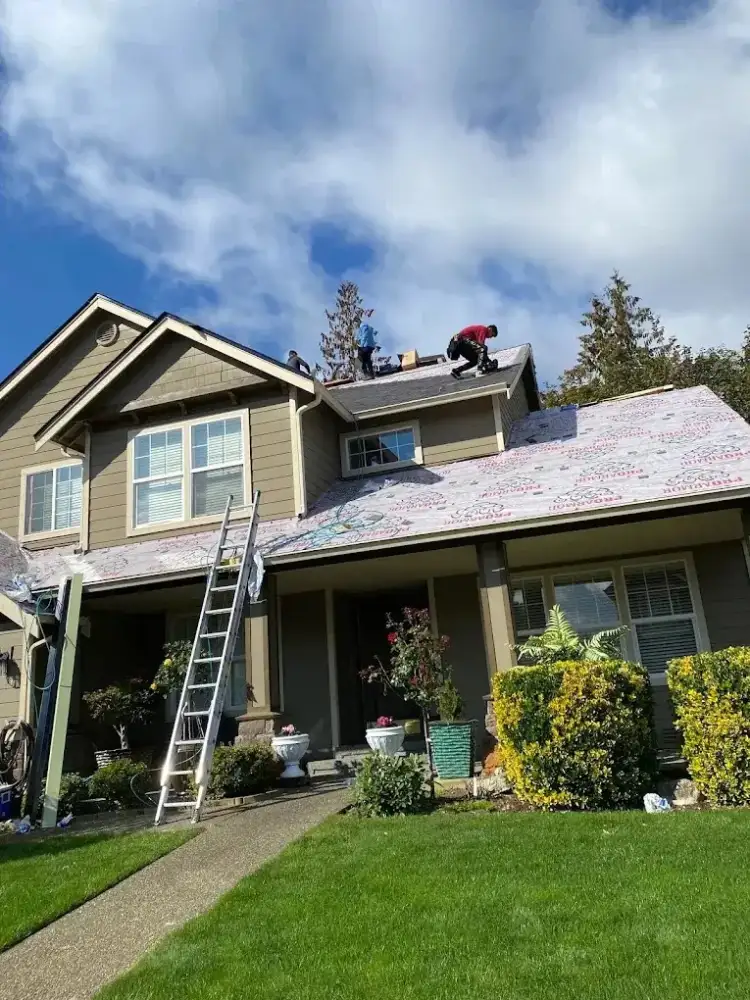
Short answer: a roof-over — new shingles installed over the old layer — is sometimes permitted and almost never what we recommend in the Puget Sound. The money it saves upfront is real; so is the decking you didn't inspect, the heat that ages the new shingles faster, and the double tear-off bill waiting at the end. In a dry climate it's a judgment call. In ours, moisture makes the judgment for you.
What a roof-over skips
The tear-off isn't ceremonial — it's the inspection. Every replacement we do reads the deck: soft sheathing at the eaves from decades of gutter overflow, rot rings around old chimneys, fastener backout, the quiet damage of poor ventilation. On older Eastside and Seattle homes, finding some of it is the norm, not the exception. A roof-over shingles over the question and calls it savings.
Why the second layer lives shorter
Shingles over shingles run hotter — the old layer traps heat that a bare deck would shed — and heat is what ages asphalt. The new layer also follows every wave and curl of the old one (telegraphing), so it never lies as flat or sheds water as cleanly. Manufacturers account for this in how they stand behind layered installs. You pay full price for a roof that starts life handicapped.
The end-game cost
Both layers eventually come off as one job — heavier, slower, pricier disposal. Add it up honestly: skipped tear-off now, discounted roof life, doubled tear-off later. The lifetime math usually lands where you'd expect, which is why our cost guide treats tear-off as the default.
When a roof-over is legitimate
Single flat-lying layer, verified-sound deck, shorter ownership horizon, budget constraints that would otherwise delay a failing roof through a wet season — there are cases, and we'll tell you honestly if yours is one. That's what the free inspection is for: (425) 270-1525.