
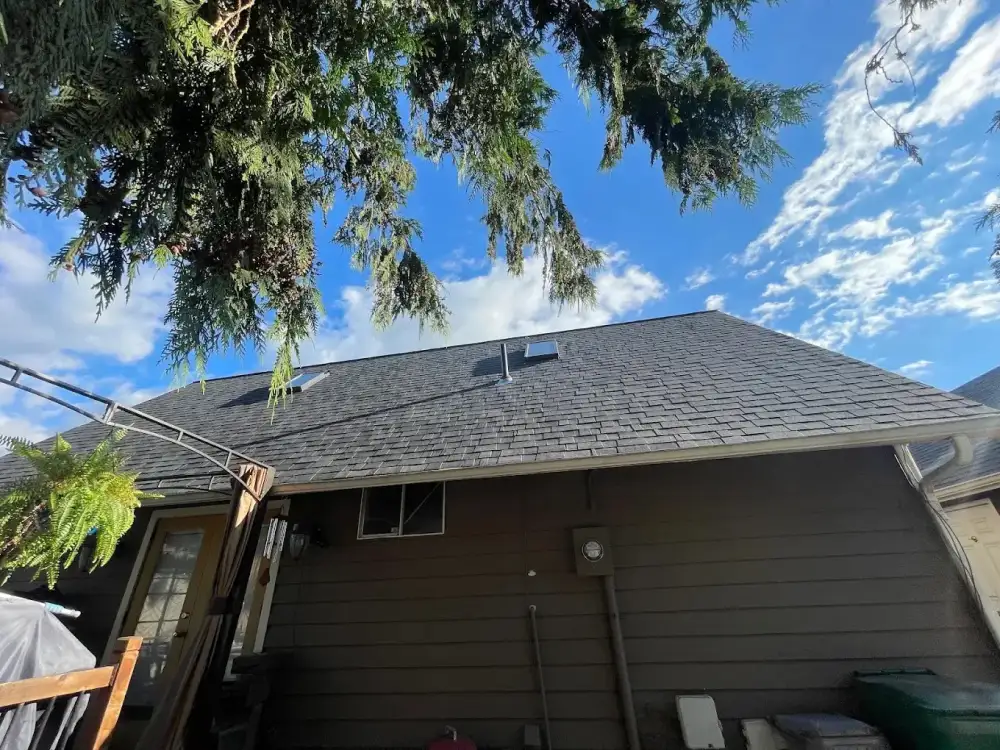
Short answer: panels last 25–30 years and don't like moving. If your roof can't promise the same horizon, replace it first — because reroofing under an installed array later means paying to remove and remount the entire system. The solar decision starts with a roofing decision, and the order of operations is the whole ballgame.
The math of doing it backwards
Install panels on a 15-year-old composition roof and you've scheduled a collision: the roof taps out years before the array does, and the reroof now includes detach-and-reset costs on top of everything else — plus weeks of lost production. Against that, replacing a borderline roof pre-solar simply moves up spending you'd incur anyway, and buys a clean 25-year runway where roof and panels age together.
What "solar-ready" means for the roof
- Age and condition — the core question, answered honestly by a free inspection rather than the installer's glance.
- Orientation and shading — south and west planes earn their keep; the Eastside's firs complicate more projects than clouds do. (Shade you trim for solar also happens to be shade your moss problem loved.)
- Structure and decking — arrays add load and penetrations; sound decking and proper flashing at every mount keep the waterproofing story intact.
- Ventilation done right — a reroof-before-solar is the moment to fix the attic airflow you won't want to revisit under panels.
The coordination play
The smooth projects run: roof assessment → replacement if warranted (with mounting zones planned) → array installation onto a fresh, documented surface. We work the roofing side of that sequence across the Eastside and Seattle, and we'll tell you plainly if your roof is already solar-fit — sometimes the answer is "go ahead, it's fine," and that's a free answer: (425) 270-1525.