
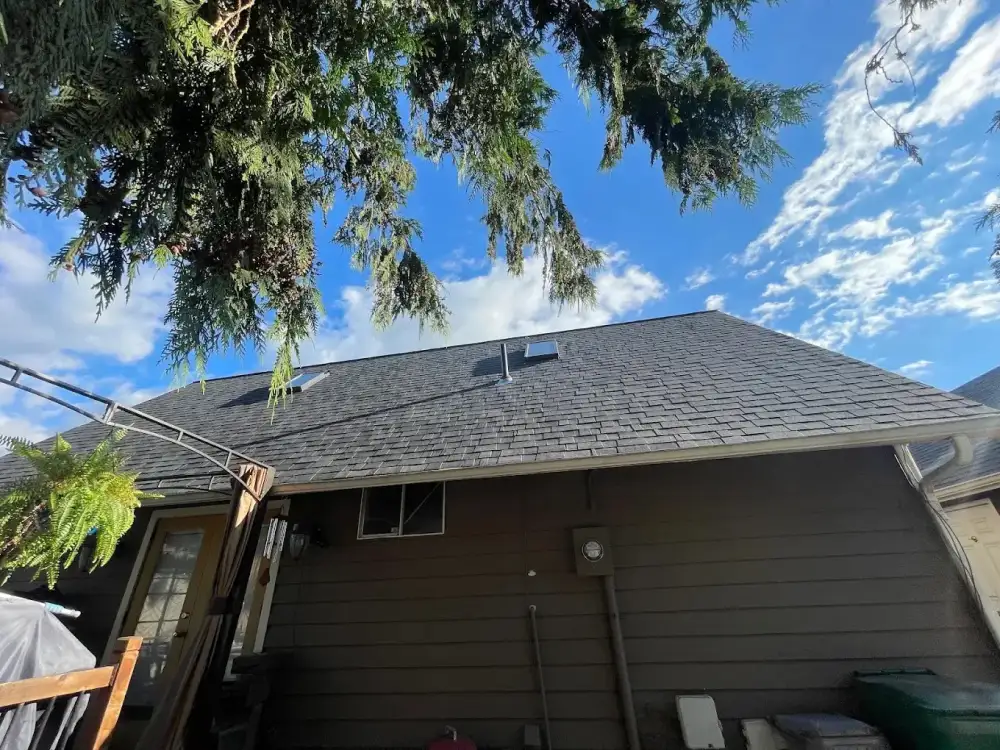
Short answer: replace the roof before you sell only when it's near the end of its life, leaking, or likely to be flagged hard by a buyer's inspector. If it's sound with some wear, a targeted repair and a clean, photo-documented inspection report usually serve you better. If you're short on time or the buyer has strong preferences, a credit or price adjustment can be the cleanest option. The right choice depends on what's actually on your roof, so start with an inspection, not a guess.
If you're planning to list sometime in 2027, you have an advantage: time. You can find out where the roof stands this winter, decide calmly, and schedule any work for a good weather window instead of scrambling after a buyer's inspection report lands.
Why the roof gets so much attention in a sale
A roof is one of the few big-ticket items a buyer can see from the curb, and one of the first things a home inspector looks at. It also touches everything a buyer worries about: water getting in, the cost of replacement in the first few years of ownership, and whether their insurer will be comfortable with it.
That means a roof can shape a sale out of proportion to its condition. A roof with a few lifted shingles and a cracked pipe boot can read as "needs a new roof" in an inspection summary if nobody explains it. A worn roof with clear records, recent repairs and photos can read as "maintained and understood." Your job before listing is to make sure the story the roof tells is accurate.
What a buyer's inspector will look at
Home inspectors work through the roof from the ground, a ladder, the roof itself where it's safe, and the attic. Expect them to note:
- Shingle condition: curling, cracking, missing tabs, heavy granule loss or bare patches.
- Moss and debris: a common sight in Western Washington, and one that often prompts a recommendation for cleaning and further evaluation.
- Flashing: around chimneys, skylights, walls and valleys, where most leaks start.
- Penetrations: pipe boots, vents and any satellite or solar mounts.
- Gutters and drainage: overflow stains, sagging runs or downspouts dumping water near the foundation.
- The attic: water stains on the sheathing, damp insulation, daylight where there shouldn't be any, and signs of poor ventilation.
- Layers: whether there's more than one layer of roofing, which matters for any future replacement.
Our guide to a roof inspection before buying a home is written for buyers, but it's worth reading as a seller. It shows you exactly what the other side will be looking for.
What Washington's seller disclosure asks about the roof
In most sales of improved residential property in Washington, the seller must give the buyer a completed disclosure statement in the format set by RCW 64.06.020. On the roof, the Structural section asks one direct question: "Has the roof leaked within the last five years?" It's one of the starred items on the form, which means a yes answer has to be explained on an attached sheet.
The same section also asks whether there have been "any conversions, additions, or remodeling," and if so, whether all building permits and final inspections were obtained. A re-roof isn't automatically a remodel, but if your city required a permit for your roof work, keeping that permit and its final inspection on file means you can answer clearly.
A few general points from the statute are worth knowing:
- The disclosures are based on the seller's actual knowledge when the form is completed. The form says plainly that it isn't a warranty.
- Unless the parties agree otherwise, the statement is due within five business days after mutual acceptance of a purchase contract.
- Unless the parties agree otherwise in writing, the buyer has three business days after delivery to rescind the agreement.
Practically, this means a leak you fixed two years ago is still something you'll likely need to explain, and good repair records make that explanation short and credible. You can read the full form in RCW 64.06.020 on the Washington State Legislature's site. This is general information, not legal advice; your real estate agent or an attorney can tell you how it applies to your sale.
Start with a pre-listing roof inspection
Before you decide anything, get the roof inspected by someone who will show you what they found. A photo-documented inspection does three jobs for a seller:
- It tells you if you're looking at nothing, a repair, or a replacement.
- It gives you a written baseline you can share with buyers, which can take the drama out of their own inspector's findings.
- It reveals small problems early, while fixing them is cheap and unhurried.
If you don't know how old the roof is, start there. Our guide on how to tell how old your roof is covers where to look, from permit records to clues on the shingles themselves. Age alone doesn't decide anything, but it frames every conversation with buyers, agents and insurers.
First Choice offers free, photo-documented roof inspections across the Greater Puget Sound area, so getting a baseline before you list doesn't have to cost you anything.
Repair, replace or credit: how to decide
Once you know the roof's condition, the decision usually falls into one of three paths. Our comparison of roof repair vs. overlay vs. replacement goes deeper on each option; here's how they play out in a sale.
When a repair makes sense
- The roof is mid-life and the problems are specific: a pipe boot, a section of flashing, a few damaged shingles.
- There's no active leak, or there's one with a clear, fixable source.
- Moss and debris are the main issue, and cleaning plus minor repairs would leave the roof in good working order.
Keep the invoice and photos. A repaired roof with a paper trail reads very differently from one a buyer's inspector discovers needs work.
When replacing before you list makes sense
- The roof is near or past the end of its expected life, or the inspector finds widespread wear rather than a few weak spots.
- There are active leaks from more than one source, or signs of soft or damaged decking.
- Your agent expects buyers in your price range to be put off by an old roof, or to use it as leverage for a larger price cut than the work would cost.
- You have the time and budget to do it properly, without rushing the job into a bad weather window.
A new roof doesn't usually return every dollar it costs in sale price, and nobody can promise it will. What it does is remove one of the biggest objections a buyer can raise and simplify the inspection, appraisal and insurance steps that follow.
When a credit or price adjustment makes sense
- You need to list soon and there isn't time to schedule a replacement well.
- The roof is worn but not leaking, and the buyer would rather choose the material and color themselves.
- You've already moved out and can't easily manage a project.
If you go this way, back the number with a written estimate from a roofer rather than a guess. Buyers trust a real scope of work more than a round figure, and it keeps the negotiation about facts. Keep in mind that some buyers' lenders and insurers may look hard at an older roof regardless of the credit, which is a conversation to have with your agent early.
Documentation buyers want to see
Whatever you decide, records do a lot of the selling for you. Put these in one folder your agent can share:
- The signed contract and written scope for any roof work, plus change orders.
- Invoices and proof of payment.
- Permit records and the final inspection sign-off, if your city required a permit.
- Product details: shingle manufacturer, product line and color, and underlayment type.
- Manufacturer warranty registration and the contractor's workmanship warranty terms, in writing.
- Before, during and after photos, especially of decking, flashing and ventilation work that's hidden once the job is done.
- Records of past repairs, roof cleaning or moss treatment, and gutter cleaning.
- Your pre-listing inspection report and photos.
Clean records also make it easier to answer the disclosure form accurately. If the roof leaked and was fixed, the explanation can be one line pointing to a dated invoice and photos.
What a clean, documented replacement looks like
Two customers' reviews describe the kind of finish buyers notice. Snt Cruze wrote that the crew "left everything clean when they were done" after replacing their roof in Seattle, and that "communication was clear from start to finish." You can read the full review and see the photos. Ryan Watson's review of his roof replacement mentions the crew "cleaning up every bit of debris" and "making any necessary repairs to the roof that were needed."
Neither review says the homeowners were selling, so we won't suggest they were. The point for a seller is simple: a tidy site, clear communication and a roof with its repairs handled are what you want buyers, inspectors and listing photos to see.
How to time a replacement before you list
If you've decided to replace, timing matters as much as the decision. Work backward from your target listing date:
- Inspect early. Winter is a good time to get the roof inspected and estimates in hand for a spring or summer listing.
- Allow for scheduling. Good roofers book ahead in the drier months, and material orders take time.
- Plan for the work itself. Most residential replacements take one to three days, but weather and hidden decking damage can stretch that.
- Leave room for paperwork. If a permit is required, the final inspection should be signed off before you list, so you can answer the disclosure form cleanly.
- Finish before photos. Listing photos should show the new roof, a clean yard and clear gutters, not a debris container in the driveway.
In Western Washington, the drier stretch from late spring into early fall gives the most margin for roofing, though crews work through much of the year. If you're aiming to list in spring 2027, booking the inspection and estimate this winter gives you the most options.
A few timing mistakes to avoid:
- Waiting for the buyer's inspection to find out the roof's condition. By then you're negotiating under a deadline.
- Scheduling the re-roof for the week before listing photos, with no room for a rain delay.
- Choosing a bold shingle color for your own taste. Neutral colors that suit the house and the street are usually the safer choice for resale, and if you're in an HOA, check the approved options first.
- Skipping the gutters. A new roof draining into clogged or sagging gutters undercuts the whole effort.
Questions to ask your agent and your roofer
Bring both into the conversation early. Useful questions include:
- Ask your agent: how do buyers in my price range and neighborhood tend to react to an older roof?
- Ask your agent: would a credit or a completed replacement work better for the kind of buyer we expect?
- Ask your roofer: is this a repair, an overlay or a replacement, and why?
- Ask your roofer: what will the written scope include for tear-off, decking, underlayment, flashing, ventilation and cleanup?
- Ask your roofer: how are hidden decking repairs priced and documented?
- Ask your roofer: what records will I receive when the job is done?
Plan it now, decide with facts
First Choice Roof Service is based in Redmond, is licensed, bonded and insured in Washington, and has been in business for 17+ years serving the Greater Puget Sound area. If you're thinking about selling in 2027, a free, photo-documented inspection tells you if you're looking at a repair, a replacement or nothing at all. Learn how our roof replacement process works, then request a free inspection or call (425) 270-1525.