
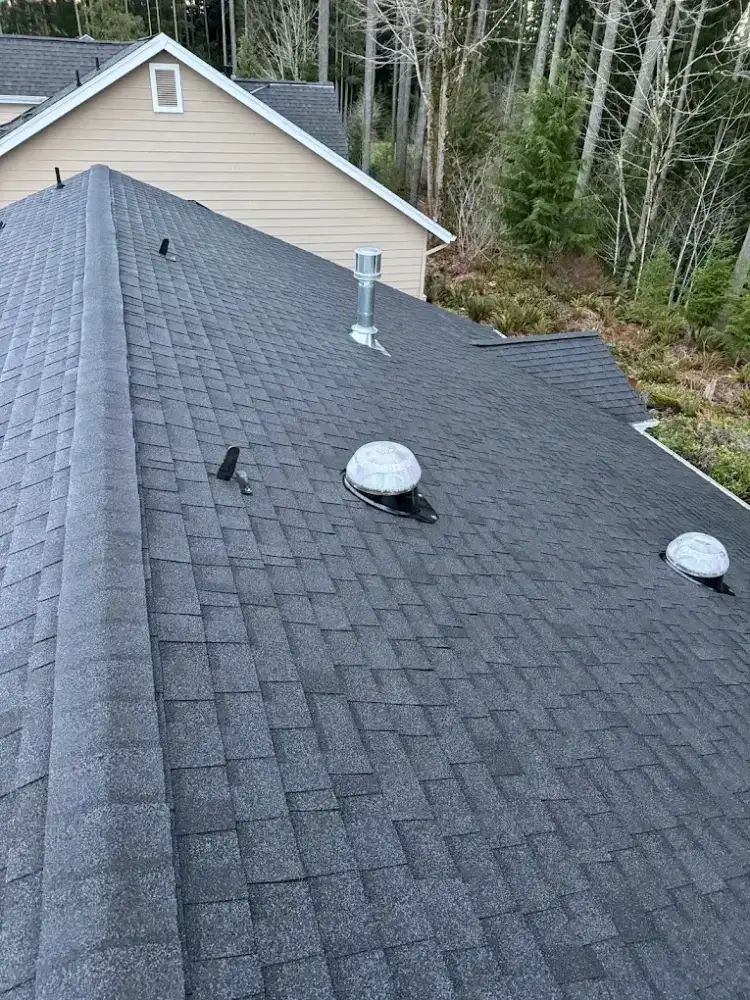
Short answer: paperwork first, permits second, the shingles themselves third. Roof age drives insurance terms, maintenance urgency, and replacement budgeting — and in Puget Sound neighborhoods where whole streets were roofed the same summer, even your neighbor's paperwork is evidence.
1. The paper trail
Your purchase file is the best archive: seller disclosures state roof age (or admit "unknown," itself informative), prior inspection reports estimate condition at sale, and warranty paperwork sometimes conveys. Installer stickers occasionally hide in the attic near the hatch.
2. Permits
Reroofs commonly pulled permits, and city and county portals make them searchable by address. A permit gives you the gold answer: date, contractor, and scope.
3. The neighborhood clock
Tract-built areas age in unison — Sammamish's development waves are the textbook case, and it holds across Renton's plats and Redmond's hills. If the street was built in 1992 and roofs turned over around 2014, your unknown roof probably shares that birthday. Neighbors remember; so do we, after 17+ years on these streets.
4. Reading the shingles
Age shows: granule loss density, edge curl, brittleness, sealant crazing, and the product generation itself (profiles and dimensions changed by decade). A professional read is usually accurate within a few years — part of every free inspection we do.
5. What to do with the number
Under 15: maintain — moss control and gutters protect the years you've got coming. 15–20: baseline inspection; budget horizon planning begins. 20+: annual checks and an honest repair-vs-replace conversation before the roof chooses its own timing, mid-storm. Wherever yours lands: (425) 270-1525, and we'll date it free.