
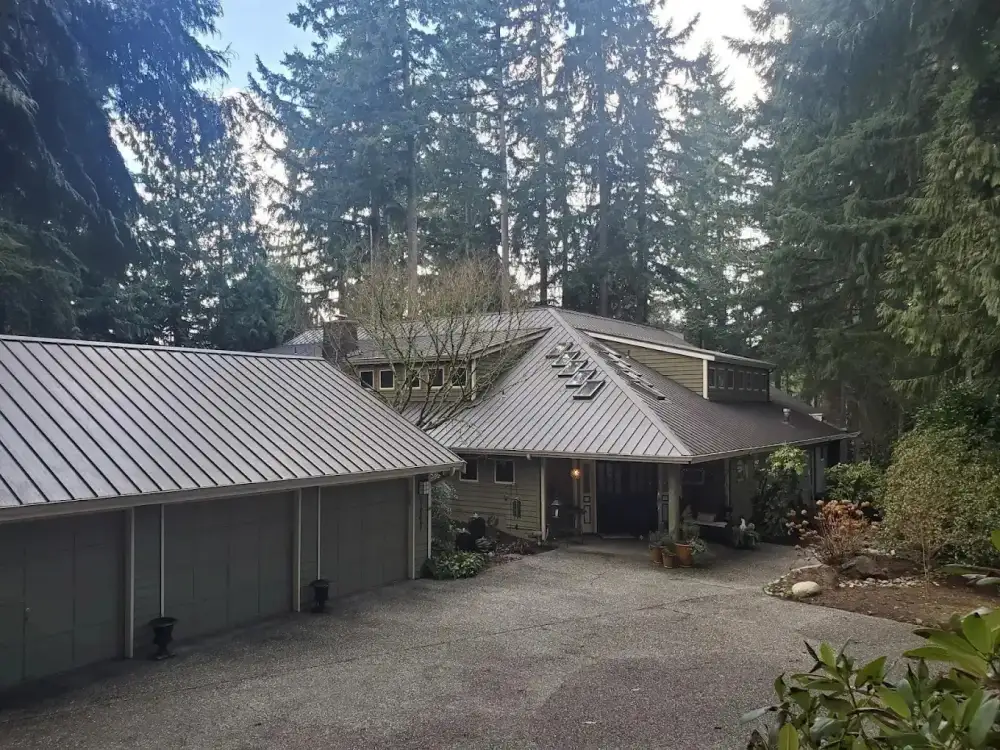
Short answer: shingles win the first decade, metal usually wins the third — and in the Puget Sound, moss is the tiebreaker. Metal's biggest advantage here isn't the material's lifespan on a spec sheet; it's that our region's roof-killers (moss, needle load, trapped moisture) barely touch it.
The upfront gap
Installed, standing-seam metal typically costs two to three times what architectural composition shingles do. That gap is real money, and for many homeowners it correctly settles the question — a quality shingle system from Owens Corning, Malarkey, CertainTeed, or IKO is a genuinely good roof.
The thirty-year ledger
Now run the same comparison across three decades in Woodinville-grade tree cover:
- Composition path: two full roofs (years 0 and ~22), plus cleaning and moss treatment every 1–2 years, plus the gutter load of granule shed and lifted-shingle repairs late in each roof's life.
- Metal path: one roof, gutter clearing (needles still fall), and near-zero moss spend — moss can't root in metal, and debris slides off.
Tally both columns and metal's premium typically pays itself back — sometimes with room to spare — if you're there long enough to collect. Sell in year eight and you paid for a benefit your buyer enjoys.
How to decide, practically
- Heavy canopy + long tenure: metal deserves serious consideration. See our metal roofing page for what's involved.
- Sunny lot or shorter horizon: algae-resistant architectural shingles are the smart money.
- Either way: maintenance decides real lifespan more than material. A maintained shingle roof beats a neglected premium one — a pattern we see weekly across Sammamish and Issaquah.
Run your own numbers
We install both systems, so our recommendation follows your house and your plans, not our inventory. Free written estimates for both options side by side: (425) 270-1525.