
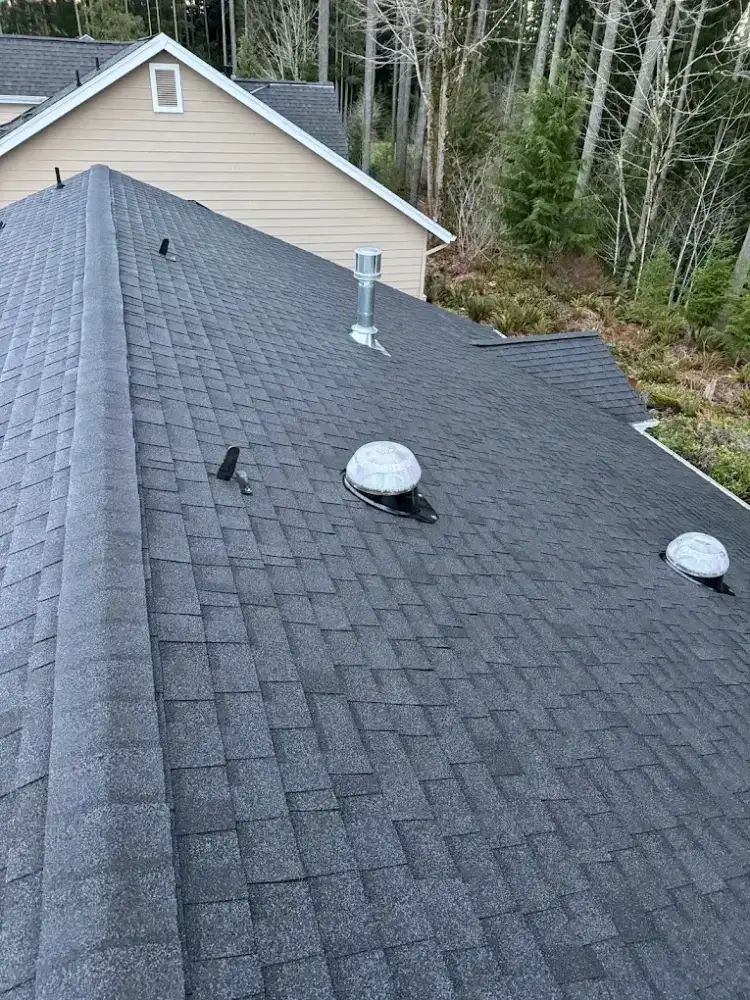
Short answer: the black streaks on Puget Sound roofs are colonies of gloeocapsa magma algae, and algae-resistant (AR) shingles fight them with copper-infused granules that release protective ions every time it rains — which here, is often. In this climate, the modest AR upgrade is close to automatic on any replacement.
What the streaks actually are
Airborne algae lands on every roof; on dry, sunny ones it starves. On a Kirkland north slope that holds morning moisture nine months a year, it thrives — darkening into the streaks that make a ten-year-old roof look twenty. Beyond cosmetics, the algae film holds moisture against the shingle surface, subsidizing the moss that does mechanical damage.
The copper mechanism
Copper is quietly toxic to algae. AR shingles seed the granule surface with copper-bearing minerals; rainfall leaches ions across the roof face, suppressing colonization before it shows. It's the same reason you'll sometimes see clean streaks below old copper chimney flashing on an otherwise streaked roof — AR shingles simply distribute that effect everywhere.
What it costs and what it's worth
Within a manufacturer's line, the AR version typically adds only modestly to material cost — small against total project price. What you buy: a roof that stays visually new for years longer, less moisture-holding biofilm, and a manufacturer AR warranty (commonly 10–25 years by line). What you don't buy: immunity from moss. Shaded roofs still need their cleaning and treatment rhythm; AR just makes the intervals kinder and the roof cleaner between them.
Who benefits most
Homes near water and under humidity — Mercer Island, lakeside Bellevue — and any streak-prone neighborhood. If you're replacing a roof anywhere in the Puget Sound and the AR option is on the table, take it. We'll show you the lines side by side in a free estimate: (425) 270-1525.