
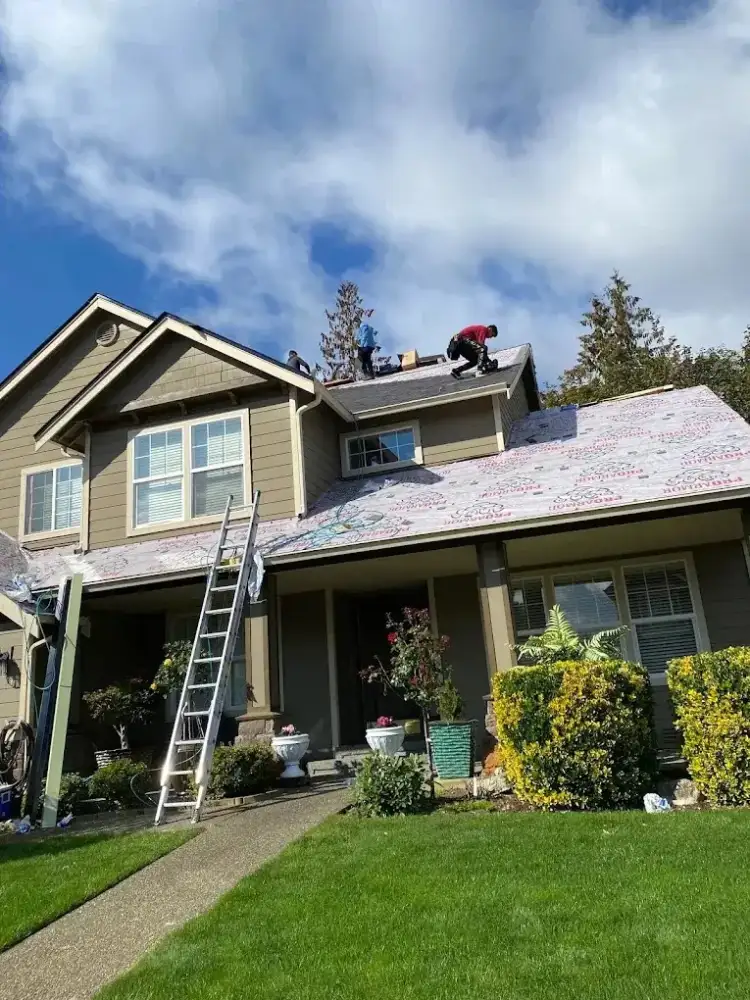
Short answer: underlayment is the waterproof layer between your shingles and the wooden deck — the backup system that catches whatever wind-driven Puget Sound rain slips past the surface. Shingle brands get chosen by color swatch; roofs get saved by what's underneath. It deserves two minutes of your attention before you sign any bid.
The job description
Shingles shed water; they don't seal it. Wind lifts edges, storms drive rain sideways, and a stray failure exposes whatever's below. Underlayment's job is to make those moments boring — water hits membrane, runs harmlessly to the gutter, and you never learn it happened. Without it (or with degraded felt), the same moments soak decking, and repair costs jump a tier.
Synthetic vs. felt, quickly
Traditional asphalt-saturated felt served for a century, but modern synthetic underlayment outperforms it in every dimension that matters here: tear strength (fasteners hold in wind), flatness (no wrinkles telegraphing through shingles), moisture tolerance, and longevity matching today's 30-year shingle systems. On our replacements, synthetic is the standard, not the upgrade.
Ice-and-water membrane: the reinforced zones
At eaves, valleys, and around penetrations, water concentrates — so those zones get a self-adhering membrane that bonds to the deck and self-seals around every nail. In our climate the point isn't Minnesota-style ice dams (though cold snaps make them possible, especially on the plateau); it's the five-month firehose of valley flow and eave backup from loaded gutters. This membrane is why a properly built roof shrugs off the storm that floods the neighbor's kitchen.
Reading a bid like a pro
One line separates quality from bargain: are the underlayment and membrane named products with coverage areas, or adjectives? Our written estimates spec the full system — deck to ridge — because the hidden layers are exactly where a roof's next twenty years get decided. See what a complete system looks like: (425) 270-1525 for a free estimate.