
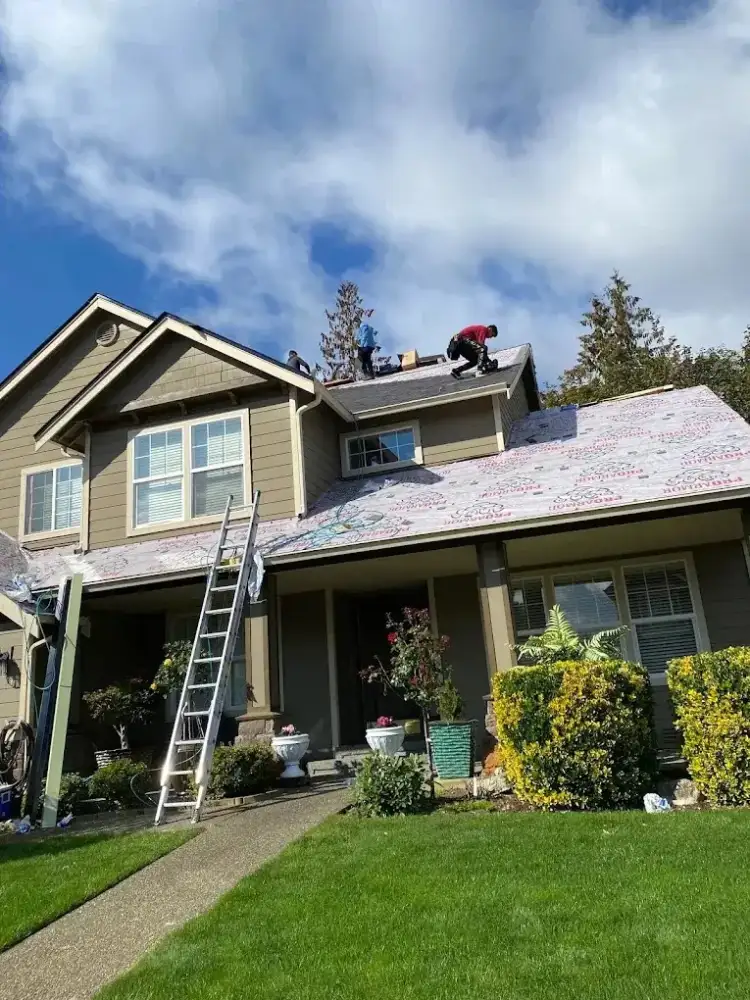
Short answer: you can replace a roof without being there, as long as three things are settled before the first shingle comes off. Name one point of contact on site and one decision-maker who can approve changes. Get a written estimate and scope detailed enough that nobody has to guess. And agree on photo documentation at each stage, ending with a final walkthrough by proxy before the last payment goes out. When the paperwork does the talking, distance stops being a problem.
Plenty of roofs get replaced while the owners are somewhere else: deployed, working a rotation, caring for a parent in another state, or living out of town while a rental or second home gets a new roof. It works when the homeowner plans for the distance instead of hoping it won't matter.
Two reviews that show what matters
Ryan Watson's roof was replaced while he was deployed. His review puts it simply: "During my deployment, First Choice Roof Service treated my wife with the utmost courtesy and respect, which was a massive relief for me." Read his full review. When the owner can't be there, the person at home becomes the client in every practical sense, and how a contractor treats that person is the whole experience.
Jojo Chen's review of a roof service visit highlights the other half: proof. The crew came at the promised time, and there were "pics provided after work done". For anyone who can't stand in the driveway and look up, photos are the inspection. See the review and customer photos.
The rest of this guide turns those two lessons into a plan you can set up from anywhere.
1. Decide who the contractor talks to
Confusion about who's in charge causes more trouble on remote jobs than anything else. Separate two roles, even if one person fills both.
- The on-site contact: a spouse, relative, neighbor or property manager who can open a gate, answer a question at the door and see the work with their own eyes.
- The decision-maker: the person who can approve a change in scope or price. If the crew opens the roof and finds rotted decking, someone has to say yes quickly, or work stalls while the house is exposed.
Put both names, phone numbers and email addresses in writing with the contractor, and state which one has the final word. Then sort out the practical details.
- Time zones and connectivity. If you're deployed or overseas, tell the contractor when you're reachable and how. Agree that the on-site contact can make routine calls without waiting for you.
- Pre-approved limits. Many owners pre-authorize hidden repairs, such as decking replacement, up to a set limit at a stated unit price, so work doesn't stop while a message waits for an answer. Write the limit into the contract.
- Signing authority. If the person at home isn't on the title or the contract, they may need written authorization to sign change orders. Military families can often get help with a power of attorney through a base legal assistance office; anyone else should ask an attorney what's appropriate.
2. Get the estimate and scope in writing, all of it
When you're on site, a vague estimate gets clarified in conversation. When you're not, the paperwork is the conversation. Before signing, make sure the written estimate spells out:
- Tear-off or overlay, and how many layers are coming off.
- Materials by name: the shingle manufacturer, product line and color, not just a generic description, plus the underlayment, ventilation and drip edge.
- Flashing: whether chimney, wall, skylight and pipe flashings are being replaced or reused.
- Hidden damage: how rotted decking will be handled and priced, and how you'll be told about it.
- Gutters, skylights and extras: anything coming off, going back on or being replaced.
- Permits: who pulls them, if your project needs one.
- Cleanup: debris removal, gutter clearing and a magnetic sweep for nails across the lawn, beds and driveway.
- Schedule and weather: the start window, what happens if rain moves in, and how the roof will be protected overnight.
- Warranty: which manufacturer and workmanship coverage applies, in writing. Our warranty page explains how ours works.
Choosing a color from a distance deserves a word of its own. Screens shift colors. Ask the contractor to leave a physical sample with the person at home, or to photograph it in daylight next to your siding, before you commit.
3. Ask for photos at every stage
Photos are the remote owner's eyes. Agree in advance on when they'll be sent, how they'll arrive (text, email or a shared folder) and who receives them. A useful set covers five stages.
- Before work starts: every roof slope, existing damage, the attic if there are stains, and the yard, driveway, landscaping and siding, so any later question has a reference point.
- Tear-off and decking: the bare deck once the old roof is off, close-ups of any rot, and the replacement sheets. This stage disappears under new material within hours, so it's the one most worth capturing.
- Underlayment and flashing: valleys, chimney and wall flashing, skylight details, pipe boots and drip edge before they're covered.
- The finished roof: each slope, the ridge and vents, and the flashing details again.
- Cleanup: gutters, beds, lawn and driveway after the crew is done.
Ask whether the contractor's normal process includes photos at each of these points or only some of them, and agree on any extras in writing. First Choice photo-documents its inspections; whoever you hire, settle the photo plan up front so nothing depends on memory later.
4. Access, pets and vehicles
Small logistics turn into real delays when nobody's home to sort them out. Settle these before the start date.
- Access: gate codes, side yards, which exterior outlets work, and whether anyone will need into the garage or attic. Roof work happens mostly outside, so in many cases the house can stay locked.
- Pets: tear-off is loud, and nails and debris come down fast. Keep dogs and cats inside or arrange boarding for the work days, and make sure the on-site contact knows the plan.
- Vehicles: cars should be out of the driveway and away from the roof edges before work starts. The contractor may need driveway space for a dumpster or trailer.
- Inside the house: hammering vibrates walls. Take down fragile items hanging on upper-floor walls, and cover belongings stored in the attic, since dust and debris can come through during tear-off.
- Outside: move patio furniture, grills and potted plants away from the house.
- Cameras and alarms: if you have a doorbell camera or a monitored alarm, let the monitoring company and your on-site contact know crews will be on the property.
5. Tell the neighbors
When you're away, your neighbors are part of the project whether you ask them or not. A short note before work starts goes a long way. Include:
- the dates, and fair warning that roofing is loud;
- where the dumpster or trailer will sit, and whether street parking will be tighter;
- a request to keep kids and pets clear of the work area; and
- a phone number for your on-site contact, in case anything lands on their side of the fence.
A friendly neighbor can also be an extra set of eyes on a day your on-site contact can't make it. If you're in an HOA, confirm any required material or color approval, and any notice the association expects, before the start date.
6. Structure payments around milestones
Payment is where distance creates the most risk, so tie money to progress you can verify. In general terms:
- Don't pay the full price up front. If the contractor asks for a deposit at signing, it should be reasonable and spelled out in the contract.
- Link any progress payment to a milestone with photos, such as materials delivered, or tear-off and decking complete.
- Hold the final payment for completion: the punch list done, the final photo set received, the cleanup confirmed by your on-site contact, and any required permit inspection passed.
- Ask for lien releases. Before the final payment, get written confirmation that suppliers and any subcontractors have been paid, so nobody can file a lien against your home for materials you've already paid for.
- Use a traceable payment method, and decide in advance who can authorize each payment. If your spouse or property manager will release payments, the contractor should know that in writing.
- Keep everything in one place. The contract, change orders, receipts, photos and warranty documents belong in a single folder you can reach from anywhere.
Before you sign anything, check the contractor's registration with the Washington State Department of Labor & Industries, and read our guide to roofing scam red flags in Washington. Owners who are far from home are exactly who door-to-door operators hope to find.
7. The final walkthrough, by proxy
The final walkthrough is the moment to catch anything missed while the crew can still fix it easily. If you can't be there, run it by video call, with your on-site contact and the contractor's representative walking the property together. Give your proxy a checklist.
- From the ground: straight shingle lines, ridge caps seated, no lifted edges, drip edge along the eaves and rakes, and finished flashing at chimneys, walls and skylights.
- Gutters and downspouts: reattached, clear of debris and flowing. Run a hose if there's any doubt.
- The yard: no shingle scraps, wrapper strips or nails in the beds, lawn, driveway or street. Ask whether the magnetic sweep has been done.
- Landscaping and siding: compare them against the before photos.
- Inside: a quick look in the attic for daylight or fresh water marks, and at the upstairs ceilings.
Then collect the paperwork: the final photo set, the invoice marked paid once it is, manufacturer warranty registration if it applies, and the workmanship warranty terms in writing. After the first heavy rain, ask your contact to take one more look in the attic and at the ceilings.
Timing: plan around the weather, not the calendar
Most residential roof replacements we do take 1–3 days. Remote owners should still plan around a wider window, because Puget Sound weather sets the schedule. Ask how the contractor decides whether to start when rain is forecast, and how the roof is protected if a shower moves in mid-job. Our article on how long a roof replacement takes covers timelines in more detail.
Questions to ask before you sign
- Who will be my single point of contact, and how do I reach them?
- Will someone from your company be on site supervising each day of the job?
- Can you send photos at the before, decking, underlayment, finished and cleanup stages? How and when?
- How will you tell us about hidden damage, and what's the unit price for decking replacement?
- Can my spouse, a family member or my property manager approve changes and sign on my behalf? What do you need from me for that?
- What's the payment schedule, and which milestones trigger each payment?
- Will you provide lien releases before the final payment?
- Who pulls the permit, if one is needed, and who meets the inspector?
- What's your plan if weather interrupts the job while the roof is open?
- Are your crews employees or subcontractors? (Ours are certified full-time employees.)
- What warranty coverage applies, and will I get it in writing?
- Can you share your Washington contractor registration so I can verify it?
For more on vetting a roofer, see how to choose a roofing contractor in Washington.
First Choice Roof Service is licensed, bonded and insured in Washington and handles roof replacement across the Greater Puget Sound area. If you're planning a replacement from a distance, ask for a free inspection and written estimate through the contact page or call (425) 270-1525, and we'll walk through how the job would run.