
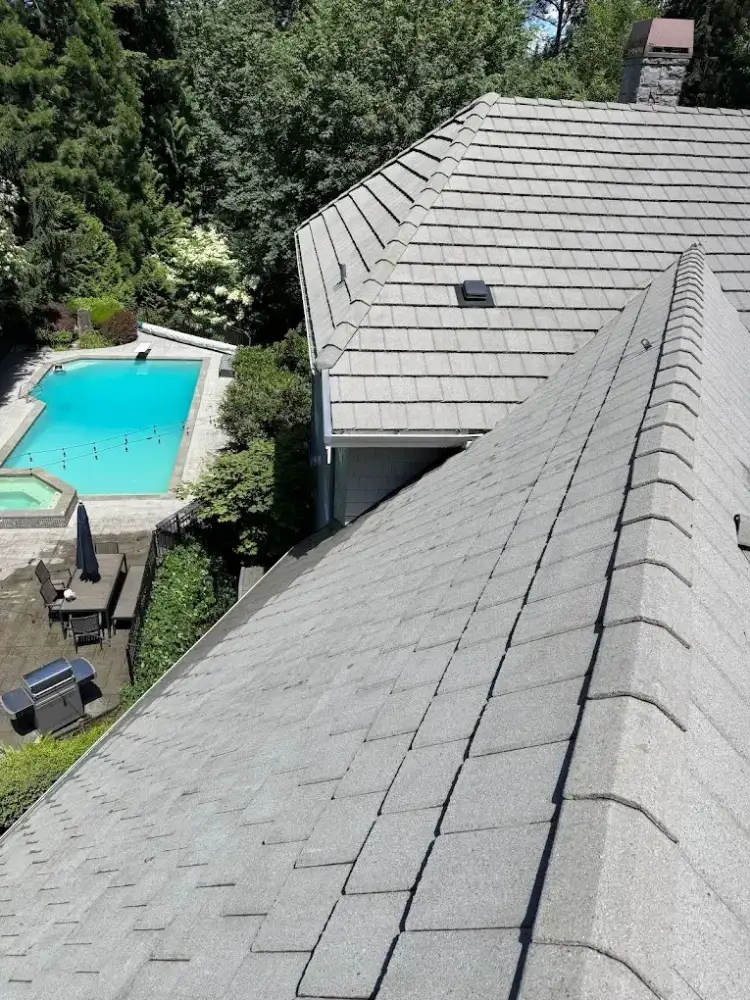
Short answer: at renewal time, insurers commonly want to know your roof's age, its material, its condition, whether it's had prior claims or leaks, and sometimes they ask for recent photos or an inspection report. You can't control your insurer's rules, but you can control your answers: have dated records, current photos and a clear picture of the roof's condition ready before anyone asks.
This article is general information, not insurance or legal advice. Every insurer sets its own underwriting rules, so confirm the details with your agent or insurer.
We're roofers, not insurance agents, and we won't guess at what any particular company will do in 2027. What we can do is explain the roof questions homeowners commonly tell us they've been asked, and what it takes to answer them well.
Why insurers care about your roof
From an insurer's point of view, the roof is the first line of defense for everything else they cover. A roof that's worn, leaking or poorly maintained makes water damage inside the house more likely. So it's no surprise the roof comes up when a policy is written, when it renews, and when a claim is filed.
That doesn't mean an older roof is a problem by default. It means the insurer wants enough information to judge the risk. The more clearly you can answer, the less room there is for assumptions.
The questions homeowners commonly get
How old is the roof?
This is the most common question, and often the one homeowners are least sure about. If you bought the house with the roof already on, the age may be a guess passed along at closing. Look for the original roofing contract or invoice, a permit record from your city, a manufacturer warranty registration, or an older home inspection report. Our guide on how to tell how old your roof is walks through where to look and what the shingles themselves can tell you.
If you truly can't document the age, say so rather than guessing. A roofer's written estimate of age and condition is a better answer than a number you can't back up.
What is it made of?
Asphalt or composition shingle, metal, cedar shake or wood shingle, or a flat or low-slope membrane. Insurers ask because different materials age and fail differently. If you know the manufacturer and product line, have it ready; it's usually on the contract or warranty paperwork.
What condition is it in?
This can be a checkbox on a form, a question from your agent, or an exterior inspection arranged by the insurer. Things that commonly draw attention include missing or damaged shingles, visible moss buildup, damaged flashing, sagging areas and signs of past leaks. In Western Washington, moss is one of the most visible issues, and it's one of the easiest to address before it becomes a talking point.
Do you have recent photos or an inspection report?
Some insurers ask homeowners to provide photos of the roof, and some arrange their own inspections or review imagery. If you're asked for photos, take them from the ground or have a roofer take them from the roof. Please don't climb up yourself. A photo-documented inspection report from a roofer gives you dated, clear images and a written description in one place.
Have there been prior claims or leaks?
Expect to be asked about past roof-related claims and water damage. Be accurate. What helps here is showing that a past problem was found, fixed and documented, with an invoice and photos of the repair, rather than left to recur.
Has the roof been replaced or repaired recently?
If you've had the roof replaced, have the contract, invoice, permit record and product details ready. Recent repairs are worth listing too, especially if they addressed something a past inspection flagged.
What Washington homeowners should know about nonrenewal
Most renewals go through without any roof discussion at all. But if your insurer decides not to renew, Washington sets some ground rules. According to the Washington State Office of the Insurance Commissioner, an insurer must send written notice 60 days before canceling or not renewing your policy, and must clearly explain why. The commissioner also suggests asking your agent to help you find other coverage if that happens.
If you receive a notice that mentions your roof, read the stated reason carefully, then call your agent to find out exactly what the insurer needs to see. Sometimes the answer is a repair, cleaning or updated documentation; sometimes it's a bigger conversation. If you have questions about your rights, the Office of the Insurance Commissioner's page on changing homeowner policies explains the basics.
For more on how insurance and roofing intersect, our roofing and insurance page covers what we can and can't help with.
Build a roof file before renewal
The single most useful thing you can do is keep one folder, paper or digital, with your roof's history. When your agent or insurer asks a question, you answer from the folder instead of from memory. Include:
- Age proof: the roofing contract, invoice, permit record and final inspection, or warranty registration.
- Product details: manufacturer, product line, color and underlayment type, if you have them.
- Warranty terms: the manufacturer warranty and the contractor's workmanship warranty, in writing.
- Inspection reports: any photo-documented inspection, with its date.
- Repair records: invoices and before-and-after photos for every repair.
- Maintenance records: roof cleaning and moss treatment, gutter cleaning, and any debris removal after storms.
- Your own photos: a set taken from the ground each season, so you can show the roof's condition over time.
- Claim history: claim numbers, adjuster reports and the repair records that closed out each claim.
The same folder pays off well beyond renewal. It's what you'll want if you ever file a claim, and what a buyer's inspector will ask for if you sell.
Maintenance records matter more than most people think
Many homeowners maintain their roofs and simply never write it down. If your gutters get cleaned every fall and the moss gets treated every couple of years, keep the receipts and take a quick photo afterward. A roof with a maintenance history is easier to describe honestly as well cared for.
If you don't have a routine yet, our 2027 roof maintenance calendar for Western Washington lays out what to check each season. Following it gives you better records almost by accident.
When a pre-renewal inspection makes sense
You don't need an inspection before every renewal. It's worth considering when:
- The roof is older, or you don't know its age.
- You've had a leak, storm damage or a claim since your last inspection.
- Your insurer or agent has asked for photos, a condition report or proof of repairs.
- You can see moss, missing shingles or damaged flashing from the ground.
- You're about to change insurers and want current information on hand.
Timing matters. Schedule the inspection far enough ahead of your renewal date that any repairs can be done, photographed and invoiced before the paperwork is due. A free, photo-documented roof inspection gives you current photos and a plain description of what's on the roof, including a straight answer if nothing needs doing.
When to talk to your agent
Your agent is the right person for anything about coverage, premiums, deductibles or eligibility. Call them:
- Well before renewal, if you know the roof is older or has had problems, to ask what the insurer may want to see.
- As soon as you receive any notice or request that mentions the roof.
- Before you replace the roof, to ask whether the insurer wants specific documentation afterward.
- After a replacement or major repair, to update the roof's age and details on your policy.
- After any storm damage, before deciding whether to file a claim.
Questions worth asking your agent:
- What roof information does my insurer have on file right now, and is it accurate?
- Does my insurer want photos, an inspection report or proof of repairs at renewal?
- How does my policy handle roof damage, and does it treat older roofs differently?
- If I replace or repair the roof, what should I send you afterward?
Storms, leaks and claims
Renewal questions and claim questions overlap. If a windstorm damages your roof, document it with photos, prevent further damage where you safely can, and talk to your agent about whether a claim makes sense. Our guide to storm damage and roof insurance claims covers the steps. If water is coming in, our post on whether insurance covers roof leaks in Washington explains the common distinction between sudden damage and wear and tear.
Either way, a repair record that shows the damage was fixed promptly is something you'll want in your roof file at the next renewal.
If a replacement is already on your 2027 list
Some homeowners already know the roof is near the end of its life. If that's you, think about the order of events. Talk to your agent before the work to ask what the insurer will want to see afterward, then schedule the replacement for a good weather window rather than rushing it to beat a renewal date. Once the job is done, send your agent the contract, invoice, product details and permit sign-off so the roof's age and material are updated on your policy.
If the roof needs work before a replacement is practical, a repair that stops a leak and a cleaning that clears heavy moss can keep it in honest working order in the meantime. Just keep the records, so your file shows a roof that was looked after right up to the day it was replaced.
A pre-renewal checklist
- Find your renewal date and put a reminder on the calendar a couple of months ahead of it.
- Gather age proof: contract, invoice, permit record or warranty registration.
- Take a fresh set of ground-level photos of every side of the roof and the gutters.
- Check the attic after a heavy rain for stains, damp insulation or daylight.
- Book an inspection if the roof is older, recently damaged, or the insurer has asked for a condition report.
- Finish any repairs, cleaning or moss treatment, and file the invoices and after photos.
- Call your agent with any questions, and confirm the roof details on your policy are accurate.
What we can and can't do
A roofer can inspect your roof, photograph it, describe its condition in writing, estimate its age when records are missing, and repair or replace what needs it. A roofer can't tell you what your insurer will decide, change your premium, or promise that any work will satisfy an underwriter. Be cautious of anyone who does.
Get your roof file started
First Choice Roof Service is based in Redmond, is licensed, bonded and insured in Washington, and has been in business for 17+ years serving the Greater Puget Sound area. If your renewal is coming up in 2027 and you'd like current photos and a clear picture of your roof's condition, request a free inspection or call (425) 270-1525.