
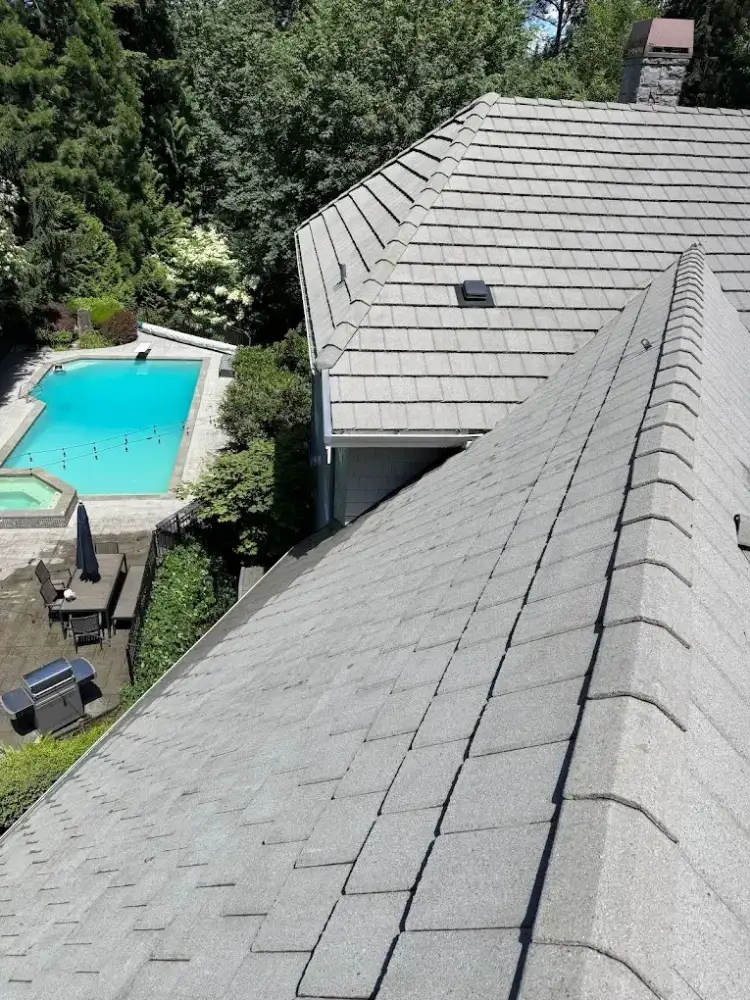
Short answer: a general home inspection tells you the roof exists and looks a certain way; a roofing-specific inspection tells you what it will cost you. In a market where Eastside homes trade at premium prices, walking into closing with photo-documented knowledge of the roof's remaining life is some of the cheapest leverage a buyer can get — and ours are free.
Where general inspections stop
Home inspectors are capable generalists covering hundreds of items in an afternoon — the roof gets minutes, often viewed from the eave line, flagged with cautious language: "aged, recommend evaluation by roofing professional." That sentence is your cue, not your answer. What it can't tell you: whether the flashing under the moss is five years or twenty-five years old, whether the attic side shows the condensation signature, or whether that ridge line means settled framing or sloppy prior work.
What the roofer's hour finds
- Actual remaining life — granule condition, shingle flexibility, fastener state, sun-side vs. shade-side aging. "About 5–8 years" is a budgetable fact.
- The repair ledger — chimney flashing due, boot replacements, a valley on borrowed time: line items you can price into your offer.
- History reading — layered roofs, cedar conversions done with or without re-sheathing, the tell-tale patches of prior leaks.
- The moss verdict — established colonies mean deferred maintenance; our region's buyers should read the north slope before the kitchen.
Both sides of the table
Sellers use them too: a documented sound roof preempts the buyer's scary-sounding inspection footnote, and handling known small repairs before listing beats crediting them at closing under pressure. Either direction, evidence beats adjectives — see our inspection service for what's included.
Buying or selling anywhere from Mercer Island to Bothell? The inspection is free and the photos are yours: (425) 270-1525.